Sophia Mainka
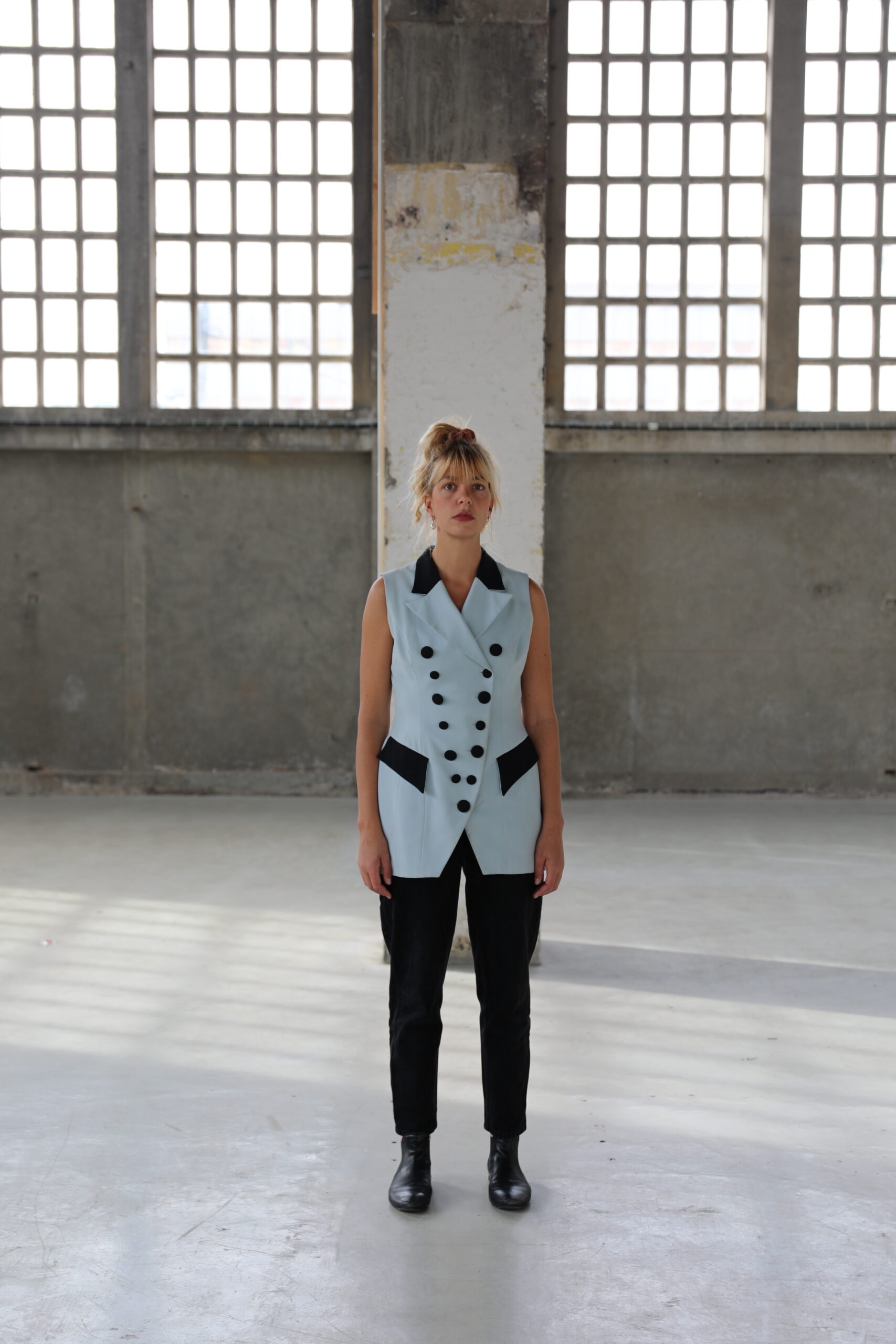
Sophia Mainka (b. 1990, Munich) lives and works in Paris. She began her studies in philosophy at LMU Munich before continuing at the Academy of Fine Arts Munich, where she completed her studies in Fine Arts under Alexandra Bircken in 2020. Since 2022, she has been teaching sculpture at the Academy. Her practice combines conceptual research with immersive, material experimentation, exploring the interplay between sculpture, video, and installation.
Her work has been recognized with numerous awards and grants, including Kunstfonds Bonn (2021), the Leonard and Ida Wolf Memorial Prize of the City of Munich (2018), the Erwin and Gisela von Steiner Foundation (2022), and the Bavarian Ministry of Arts and Science (2021, 2023). In 2025, she was a finalist for the Karl Schmidt-Rottluff Scholarship of the German Academic Scholarship Foundation. She has participated in several residencies, including at the Cité internationale des arts (2022 and 2023) and the Fondation Fiminco (2023–2024). Her work has been exhibited internationally, including at Haus der Kunst(Munich), Kunstverein (Munich), Lothringer 13 Halle (Munich), Kunsthaus Dahlem (Berlin), Museum Villa Rot (Burgrieden), Stadtgalerie Lauenburg (Lauenburg/Elbe), POUSH (Aubervilliers), La Chaufferie /Fondation Fiminco (Romainville), Centre Wallonie Bruexelles (Paris), as well as in New York and Beijing.
Her most recent film, shot at the Musée de la Chasse et de la Nature (Paris), was shown last year at venues including the museum itself, Centre Wallonie-Bruxelles (Paris), Artissima (Turin), and Kunsthaus Dahlem (Berlin). In 2027, her first institutional solo exhibition will take place at Museum Kebbel Villa, coinciding with the release of her second monograph (If The Eyes Among Us Differ, 2026 / Big House Silver Star, 2021).
Sophia Mainka’s installations are inhabited by hybrid figures, ambivalent objects, and materials that oscillate between the artificial and the organic. Her work explores the often-permeable boundaries between private and public, human and nonhuman, and between function and fiction. Inspired by post-anthropocentric and feminist thought—such as Donna Haraway, Vinciane Despret, and Silvia Federici—she develops speculative narratives in which power structures are transformed, reordered, or dissolved. Things become autonomous protagonists, carriers of stories and memories, inviting a different mode of thinking: slowly, attentively, and with forms of coexistence that are yet to be invented.
Her sculptures often echo familiar objects but deny their functionality: instead of providing comfort or security, they may confront or challenge the viewer. Her vibrant, meticulously composed video works frequently feature herself embodying hybrid creatures inhabiting a posthumanist utopia already in existence. Across abstraction, scaling, manipulation, and reinterpretation, Mainka interrogates meaning and modernity— often with wit and irony—revealing that Enlightenment ideals of self-assurance are fragile: we have never truly been modern.
Sophia Mainka @FondationFiminco
That Which Crawls Inbetween
That Which Crawls Inbetween2026
Der Garten ist ein Ort der Übergänge, eine Pufferzone zwischen Straße und Haus, zwischen Blick und Besitz, zwischen dem Kultivierten und dem Wuchernden.
In That Which Crawls Inbetween entfaltet sich der (Vor-)Garten zu einer spekulativen Landschaft: fragmentiert, leicht verschoben, durchzogen von Ornamenten, Spuren und digitalen Echos. Ein Geflecht aus Zeichen, in dem Blumentopf, Türkranz, Wurm, Mond und Mensch gleichermaßen auftreten. Die Dinge verschieben sich, tauschen ihr Rollen, das Dekor ist lebendig und beginnt zurückzuschauen.
Die Tür, der Zaun trennen hier nicht, sie verschieben und markieren Übergänge, lassen sich öffnen, schließen, halb anlehnen. Sie verweisen auf Besitzlogiken, Grenzziehungen, auf das Erzählen von Innen und Außen. Der Garten wird so zum Modell des Gemeinsamen: weder ganz privat noch öffentlich, sondern eine fragile Form des Miteinanders, ein Gefüge aus Koexistenz, Aneignung und Fürsorge, in dem unterschiedliche Akteure zusammenkommen.
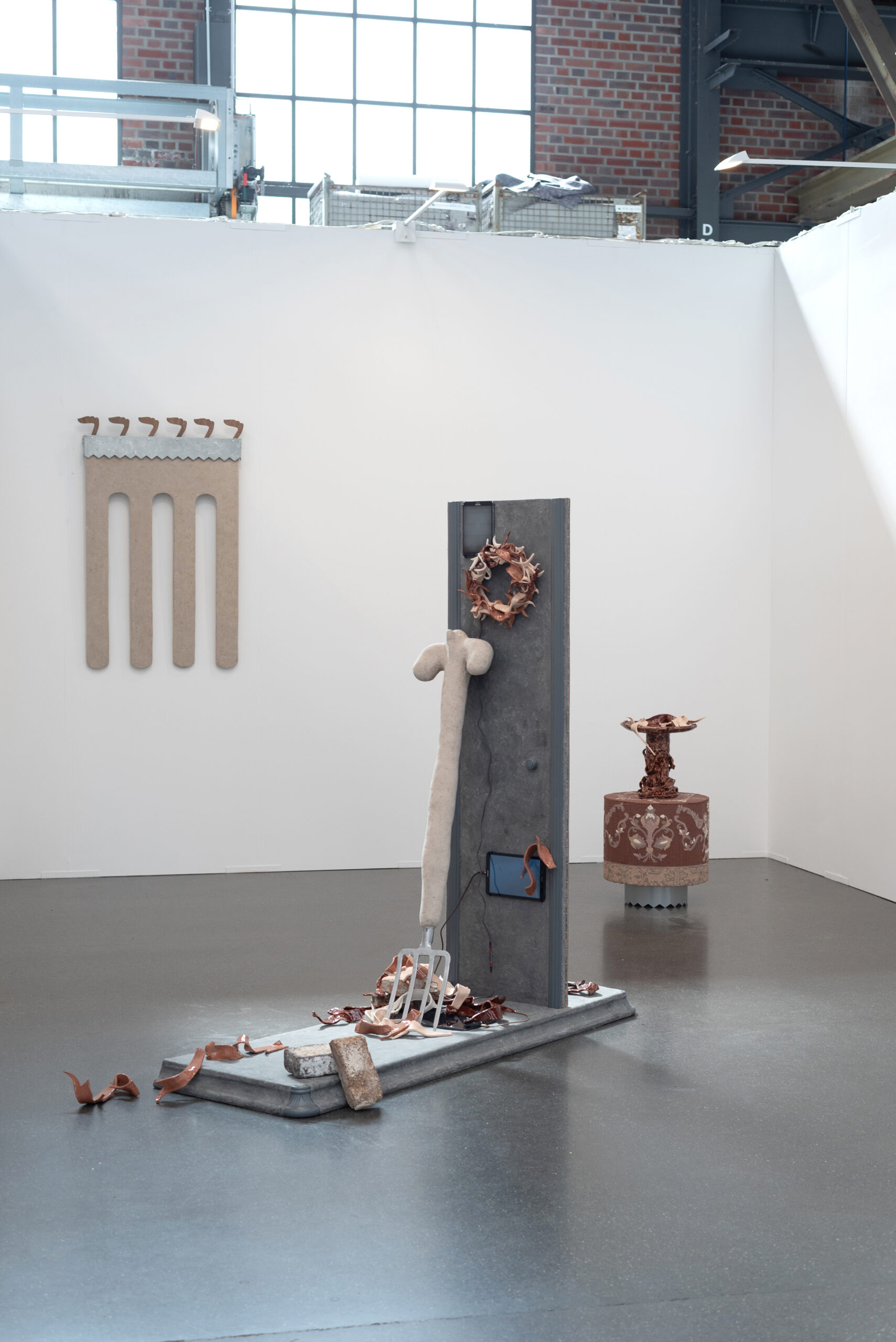
Maulwurf
video sculpture
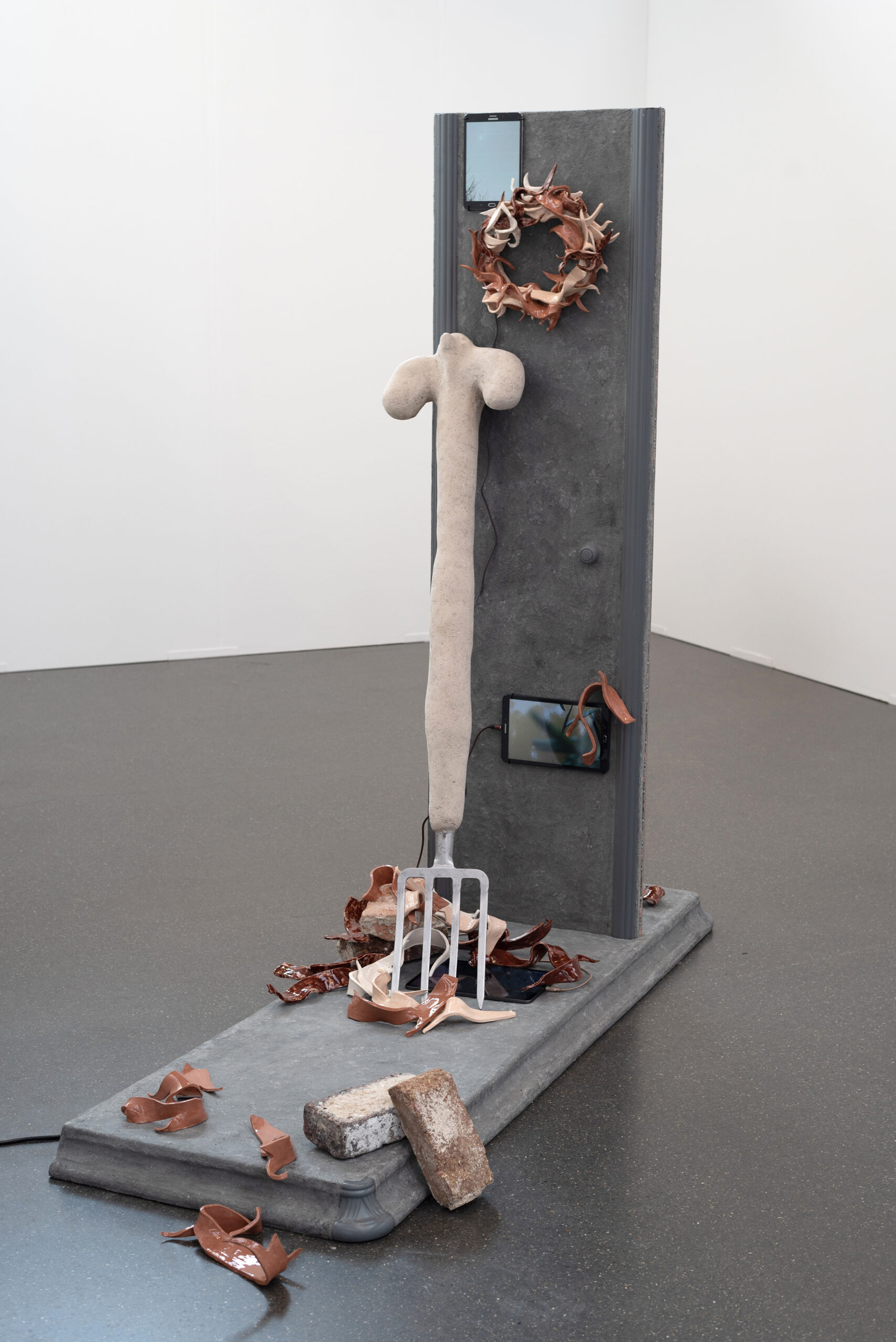
Wood, Papiermaché, ceramics (glazed), fa-bric, Tabletts, videos (full HD, without sound, Regenwurm 3.38min, Elwood 5.57min, Wurmmond 0.23min) 2026
182 x 186 x 63 cm
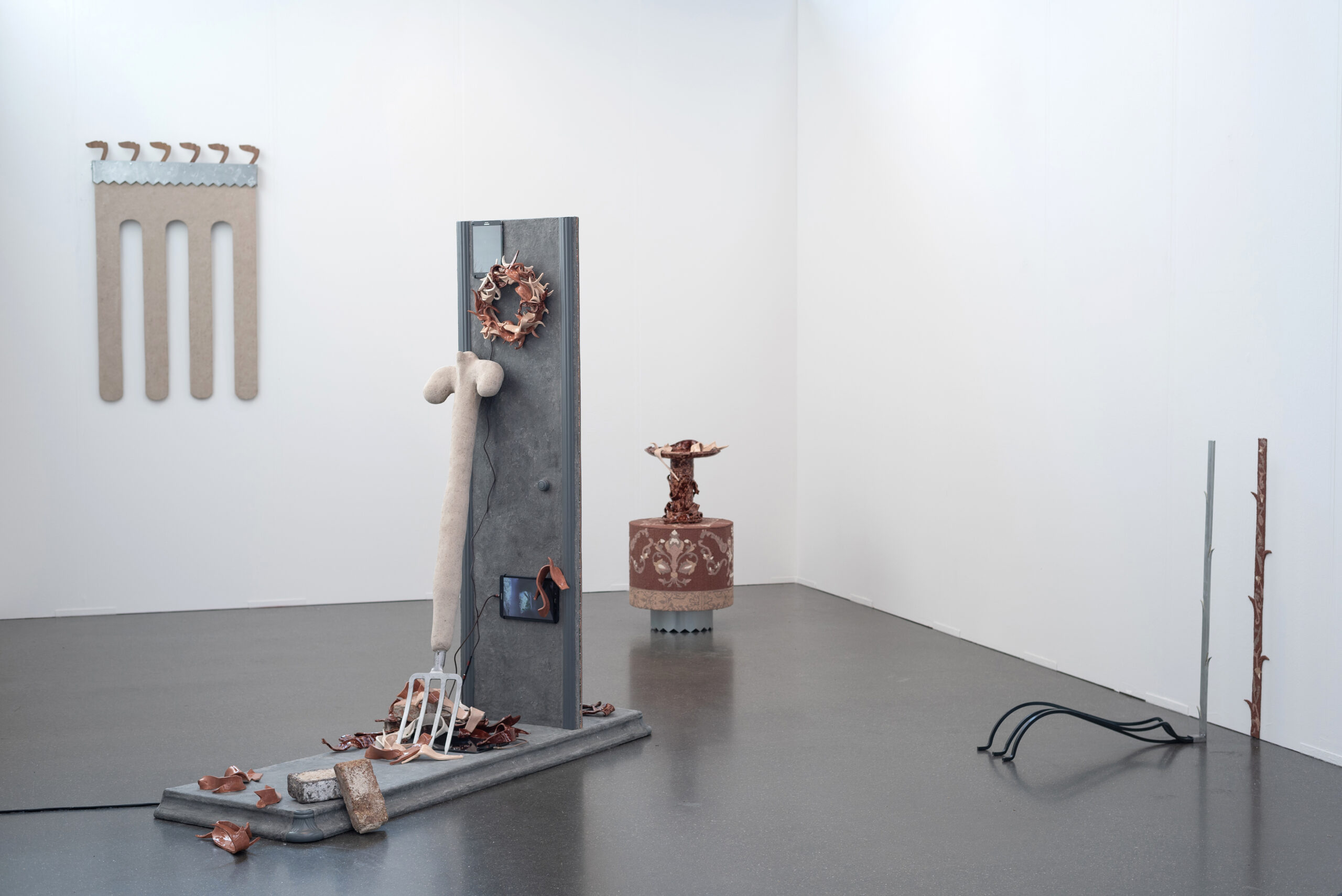
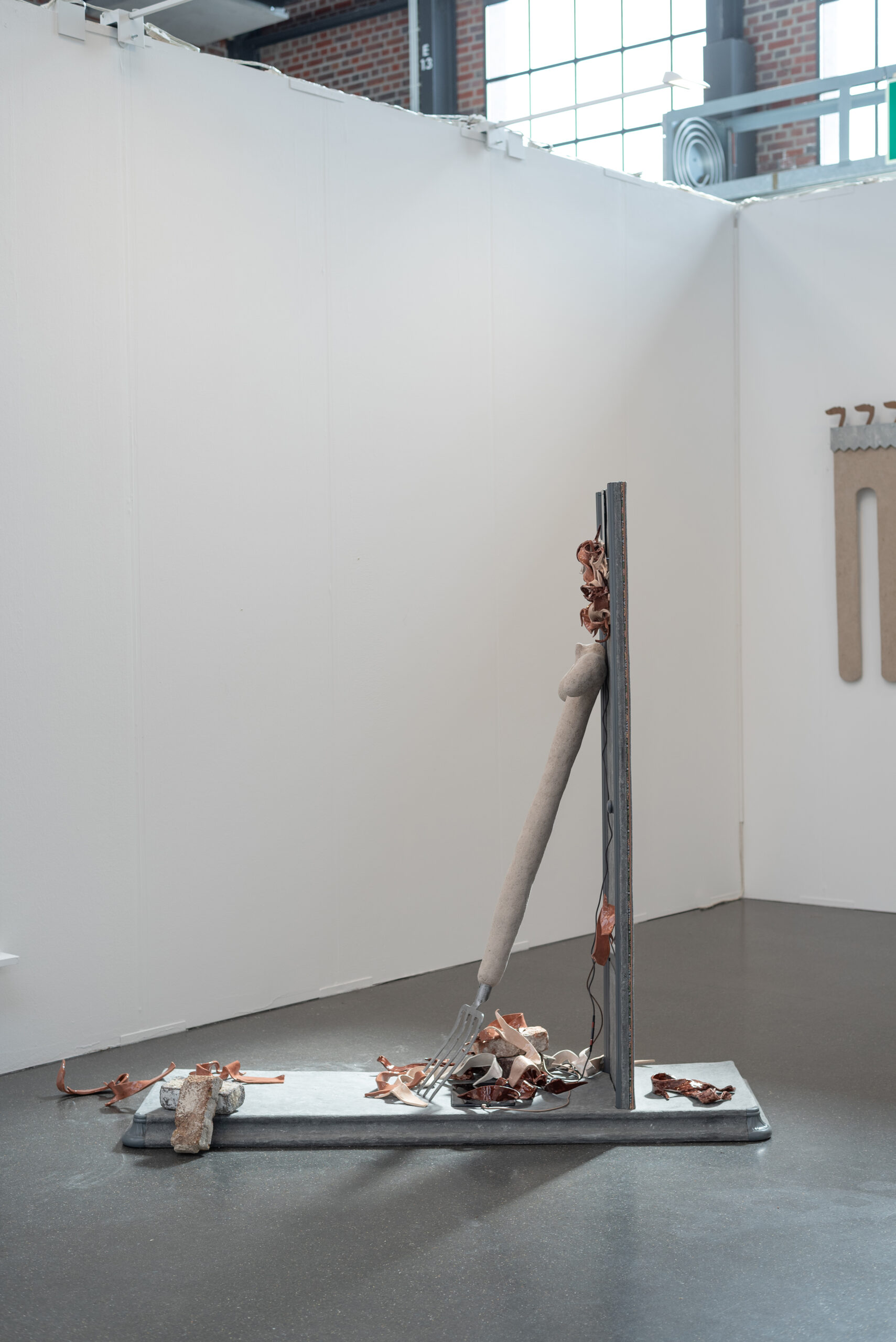
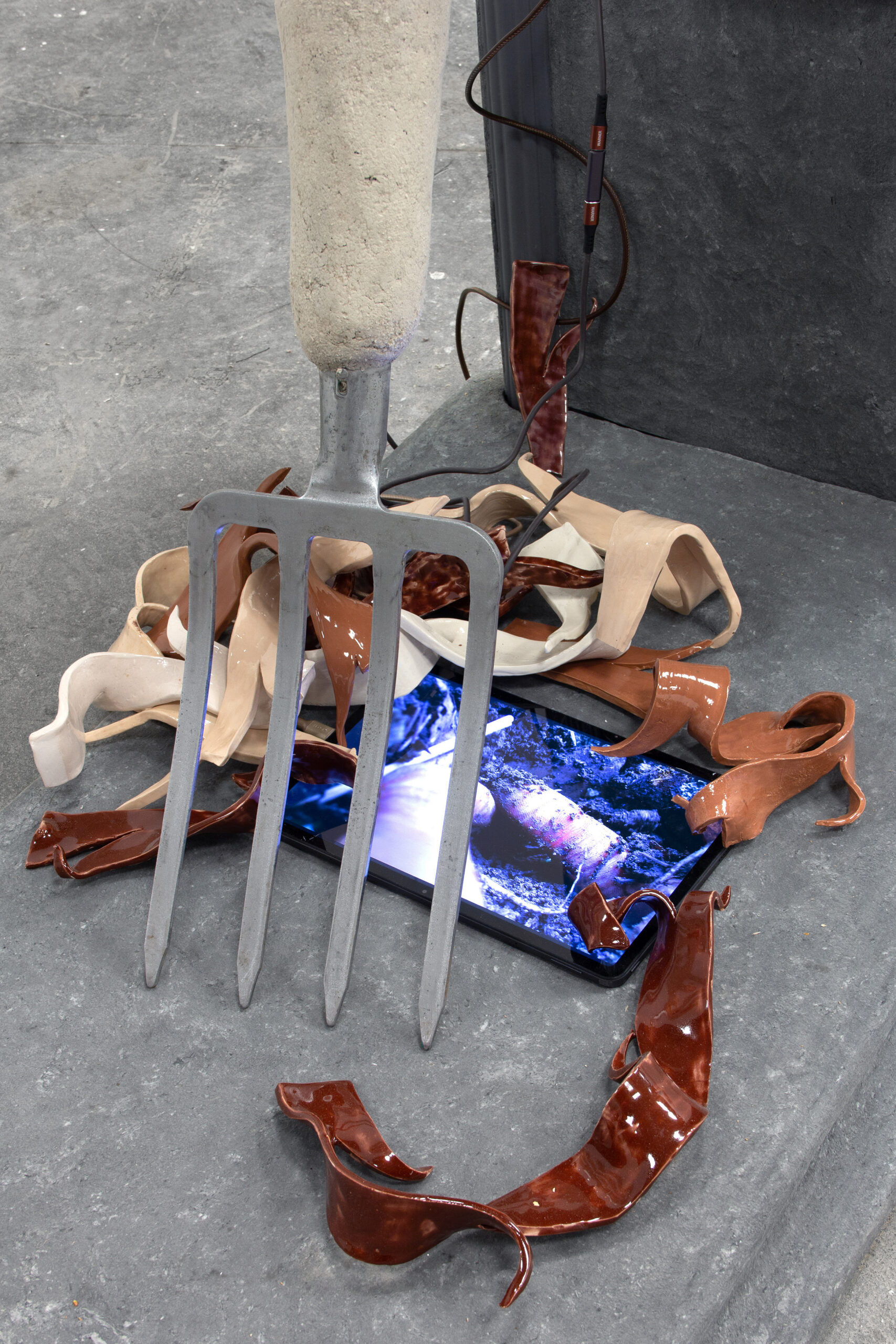
In der zentralen Videoskulptur Maulwurf wird der Garten in drei Videoessays aus verschiedenen Perspektiven durchstreift: ganz nah an der Erde, in einer nächtlichen Szene, in der sich etwas Wurmartiges tastend durch den Boden bewegt; aus der Sicht des Katers Elwood, der das Areal danach neu abgeht, prüft, beobachtet; und aus der Distanz des Mondes, eingefangen in einer Märznacht, Wurmmond genannt, der im Volksmund die Rückkehr des Lebens unter der Erde markiert. Der Wurm erscheint als Protagonist der Transformation, bleibt dabei eher eine Ahnung, ein Regungwerden unter der Oberfläche, ein Arbeiten im Verborgenen.
In den Bewegungen des Wurms, im prüfenden Blick des Katers, in den Rhythmen des Mondes zeigt sich eine andere Ordnung des Zusammenlebens; eine, die nicht auf Eigentum basiert, sondern auf Beziehung. Der Garten wird so zu einem Denkraum, in dem sich erahnen lässt, wie gemeinsames Handeln auch jenseits des Menschlichen organisiert sein könnte. Er erscheint wie ein Level in einem Spiel: kein Ziel, sondern ein Zustand – offen, durchlässig, flirrend.
Photos: Vincent Wolff and Lu Zhang
we used to be wild
We used to be wild2024
Video (fullHD, 18.32 min, stereo, loop)
Movie shot at the Musee de la Chasse et de la Nature Paris, telling about a figure entering the museum who does not know what hunting is. By reenacting and imitaing the sculptures, painting and animals she finds in the museum, she tries to figure out the relationship between humans and other animals.
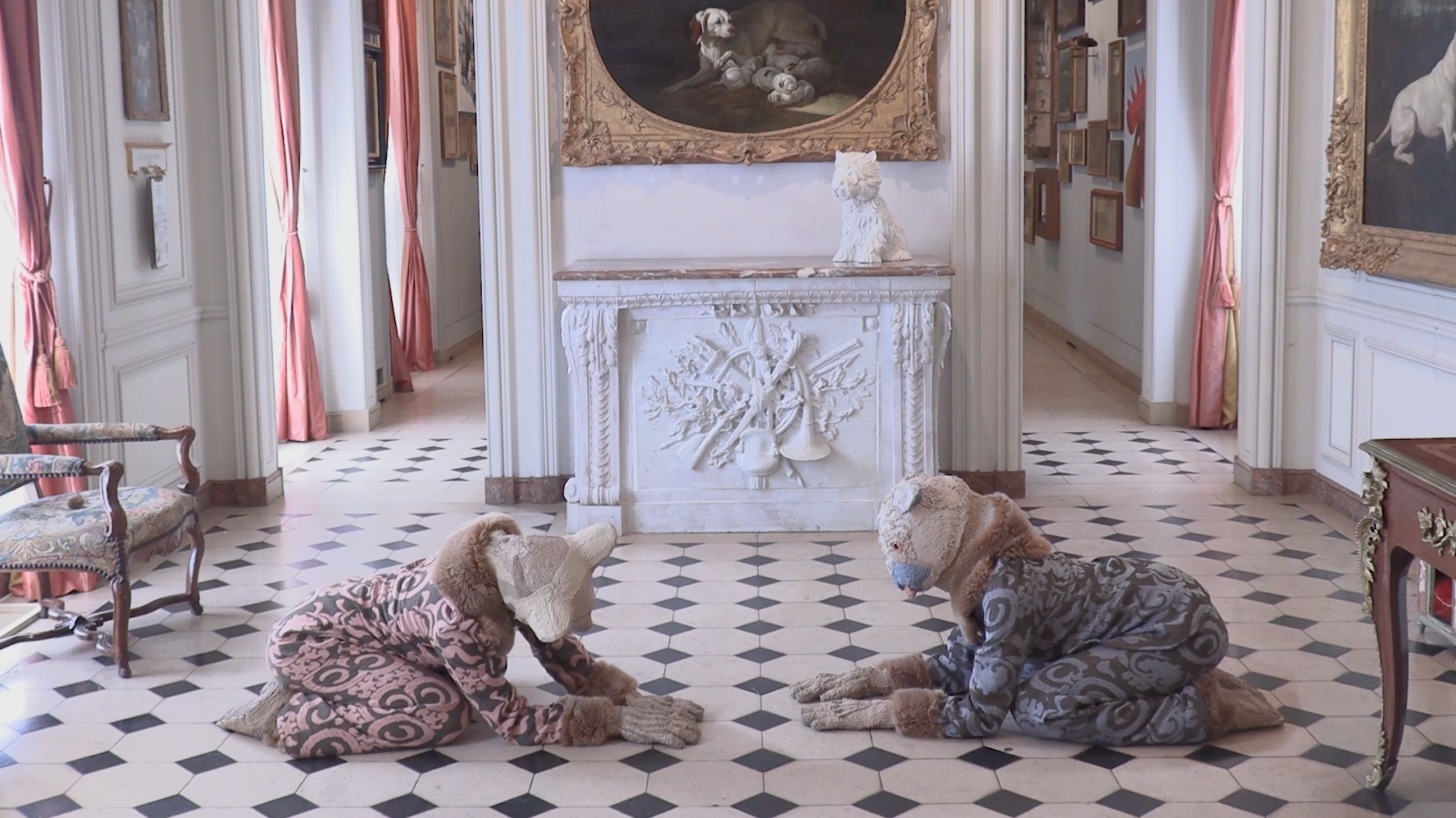
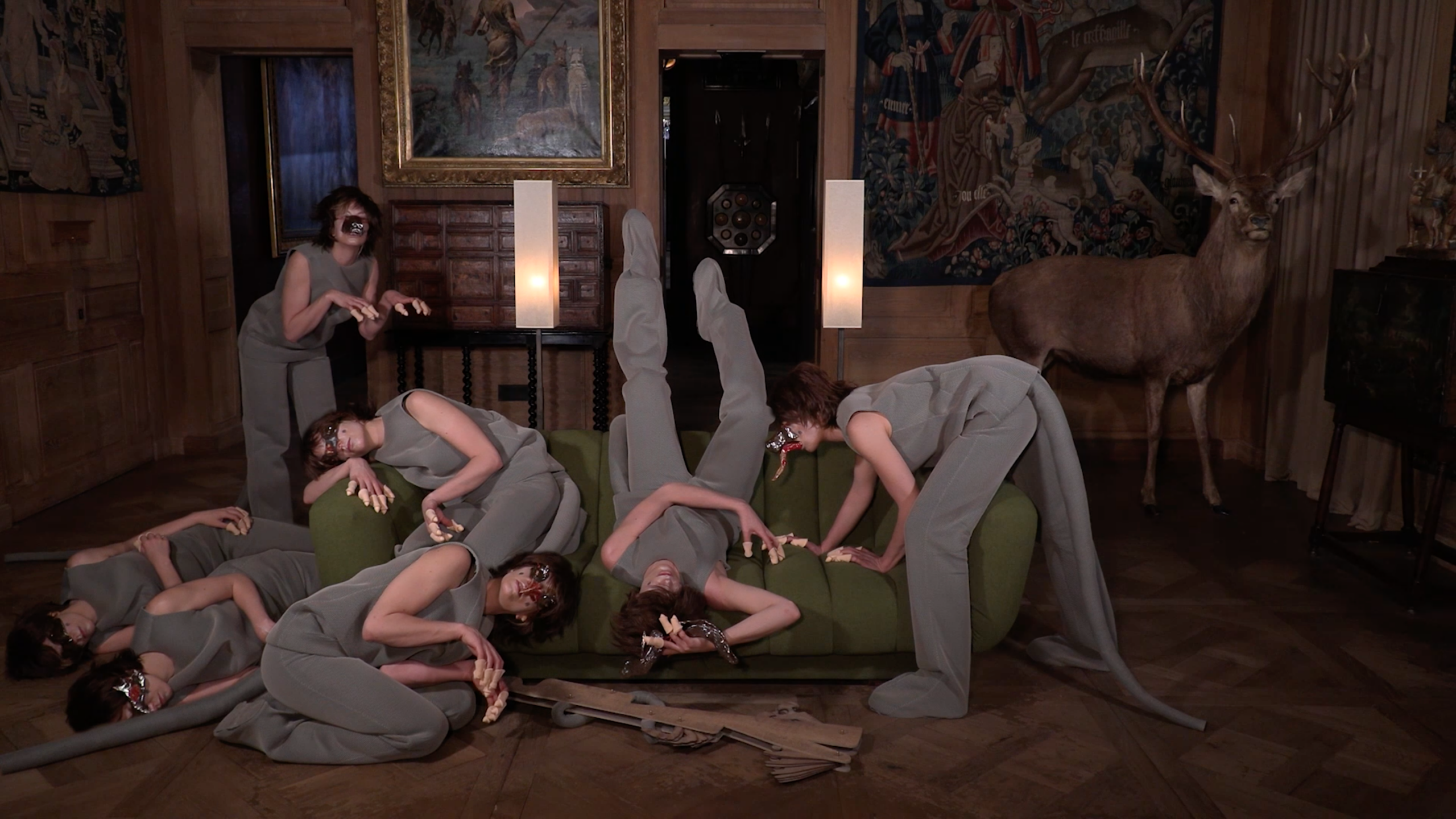
Credits: Camera – Arthur Guezou, Composition, music & mix – Nazim Bakour, Assistant camera & masque- Leontine Koehn, Laura Lilienberg, Mastering -crispy water studios, Mathias Eckert, Costumes – Sophia Mainka with Lisa Jaeger, With great support of Fondation Fiminco, Fondation Francoise Summer & Musée de la Chasse et de la Nature, Paris
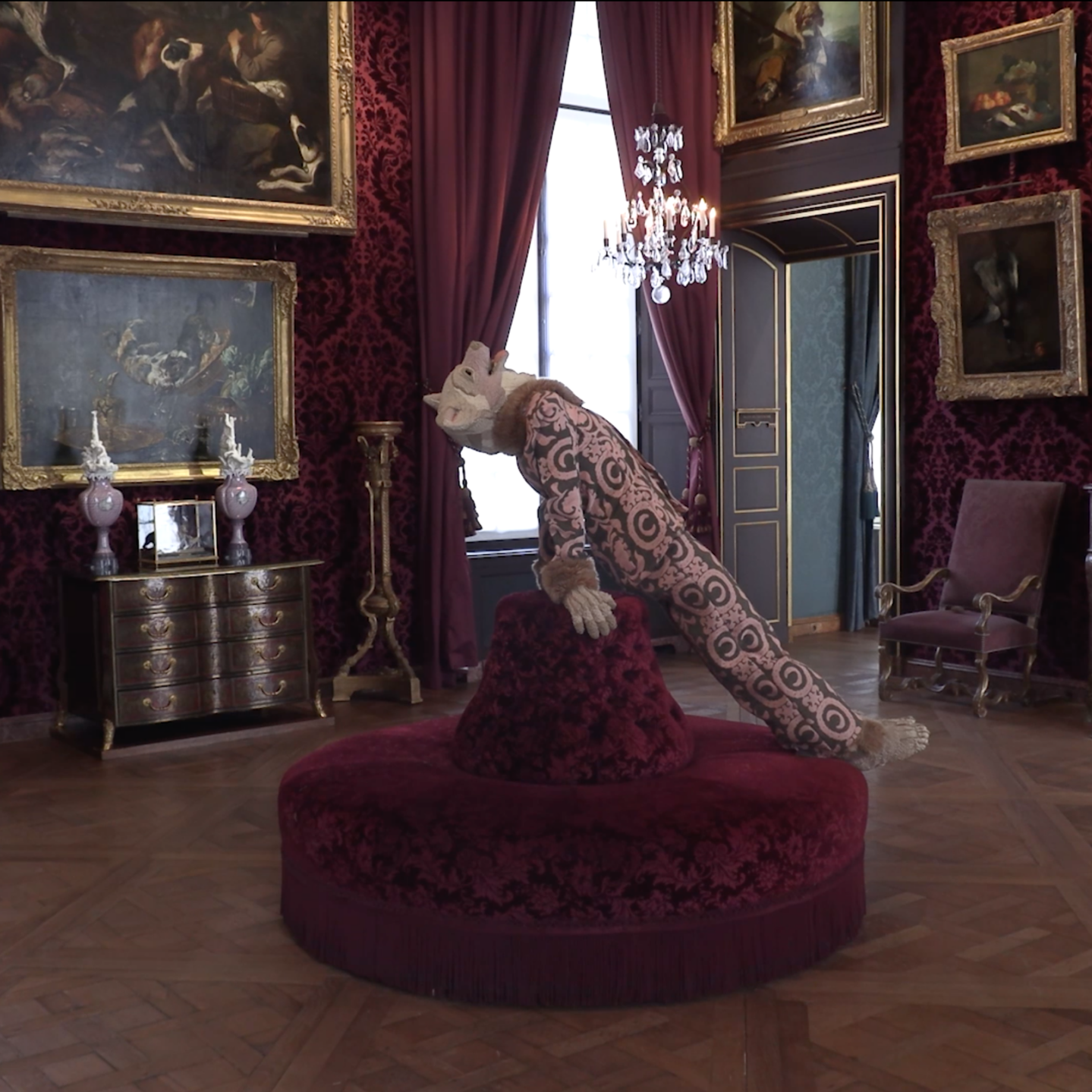
Videostills by Sophia Mainka
Shown at Kunsthaus Dahlem (2025), Musée de la chasee et de la nature, Paris(2025), Centre Wallonie Bruxelles, Paris (2025), Artissima, Turin (2025), Fondation Fiminco, Romainville (2024), Galerie Sperling, Munich (2024)
Notes on Roommates
Notes on Roommates2024
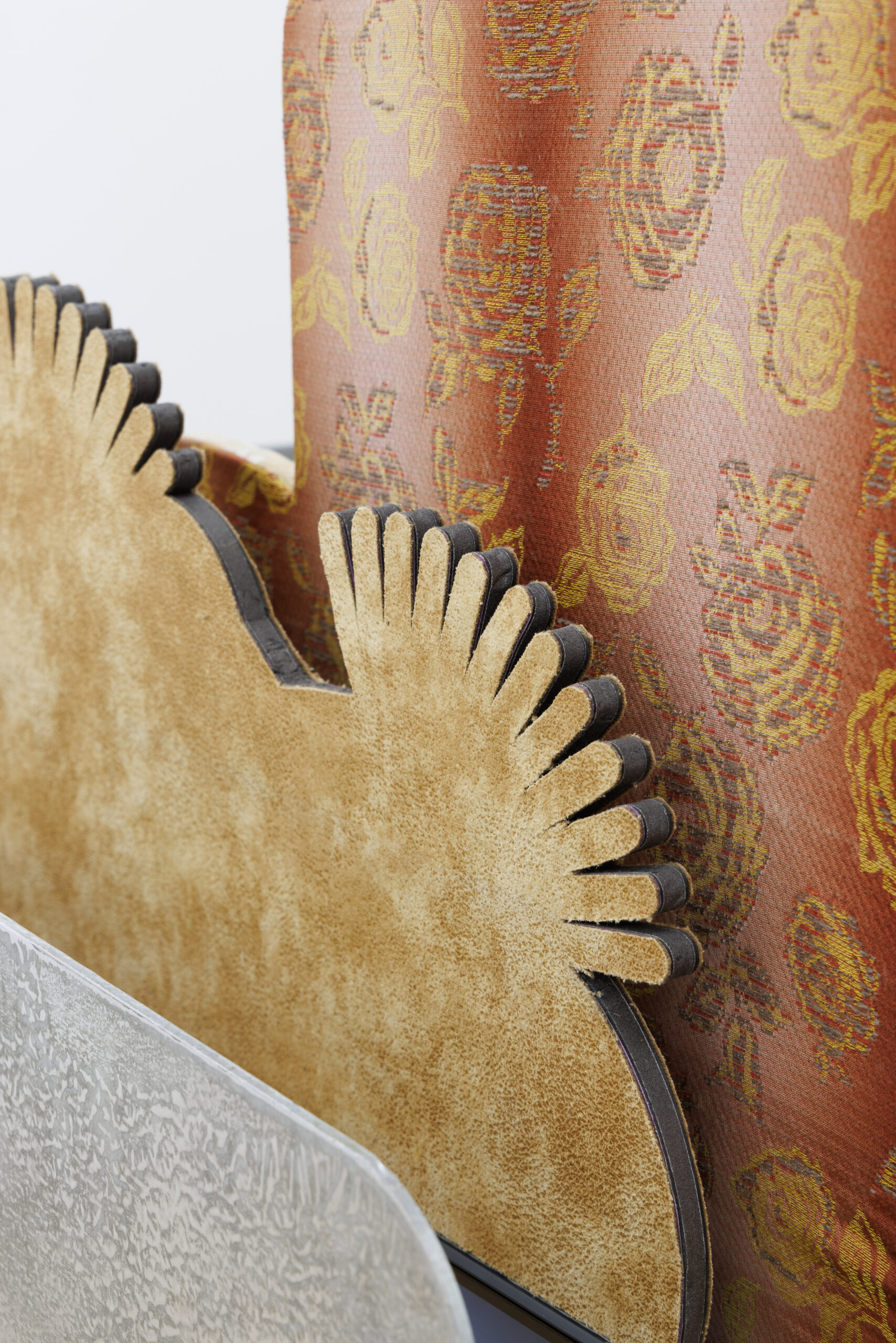
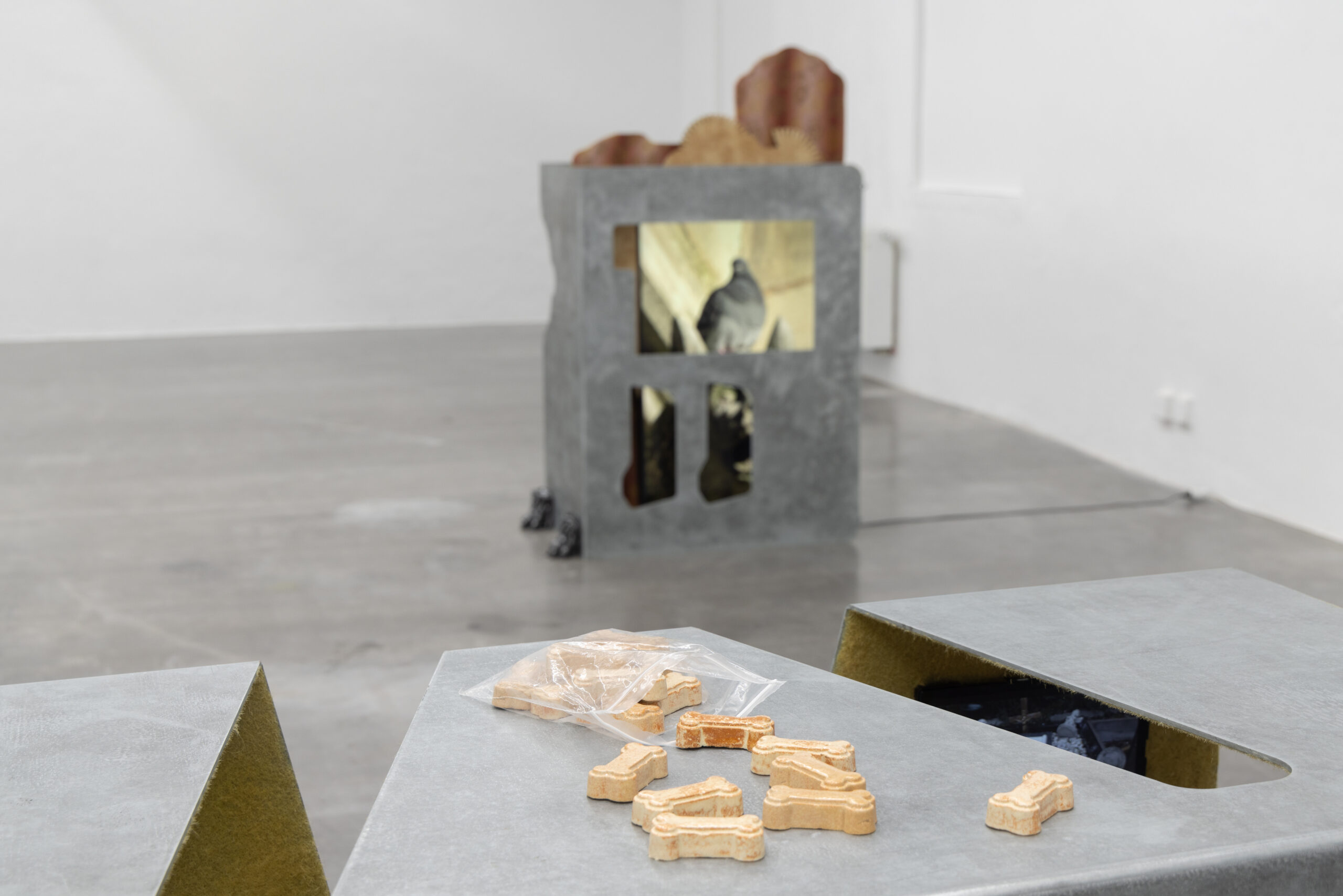
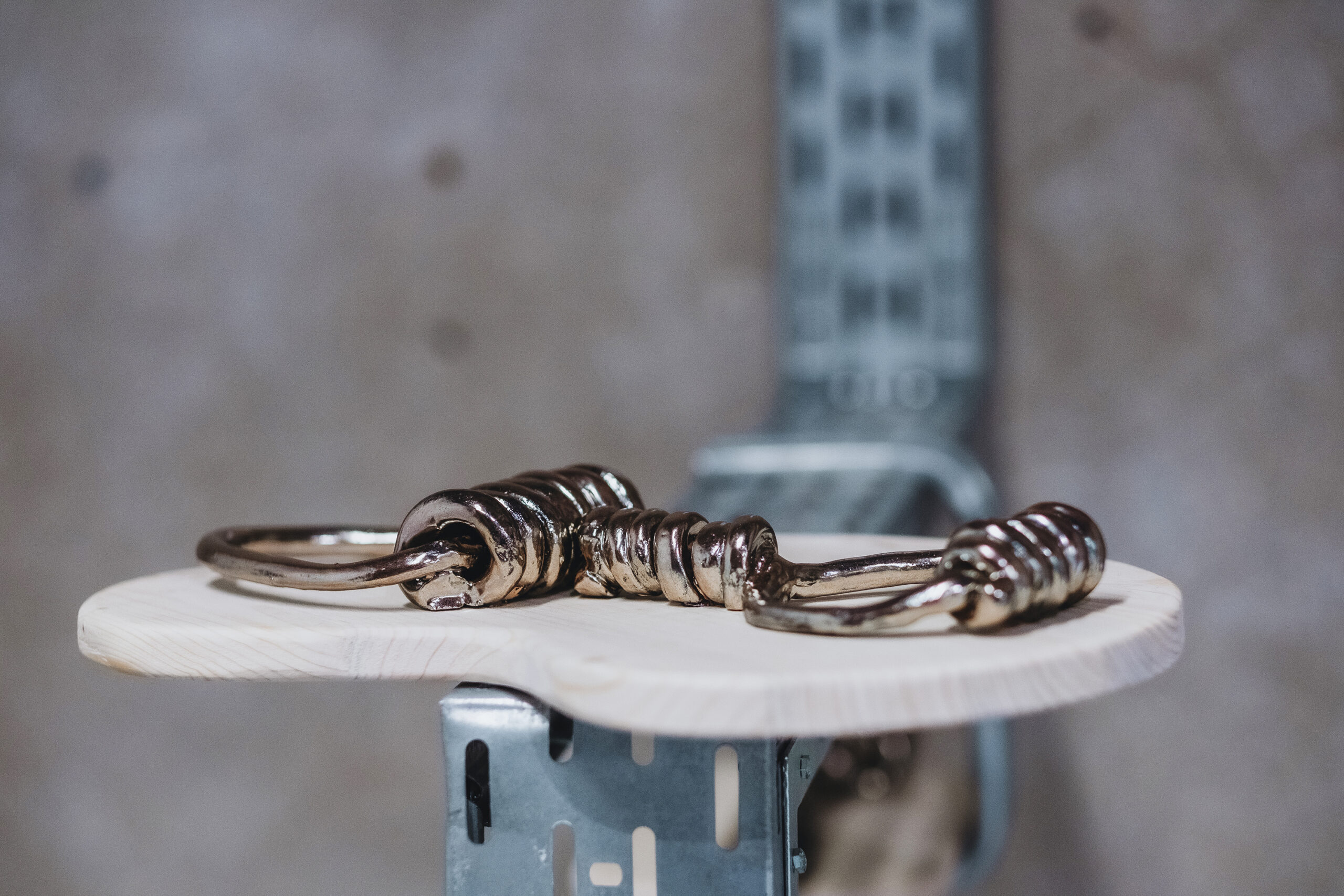
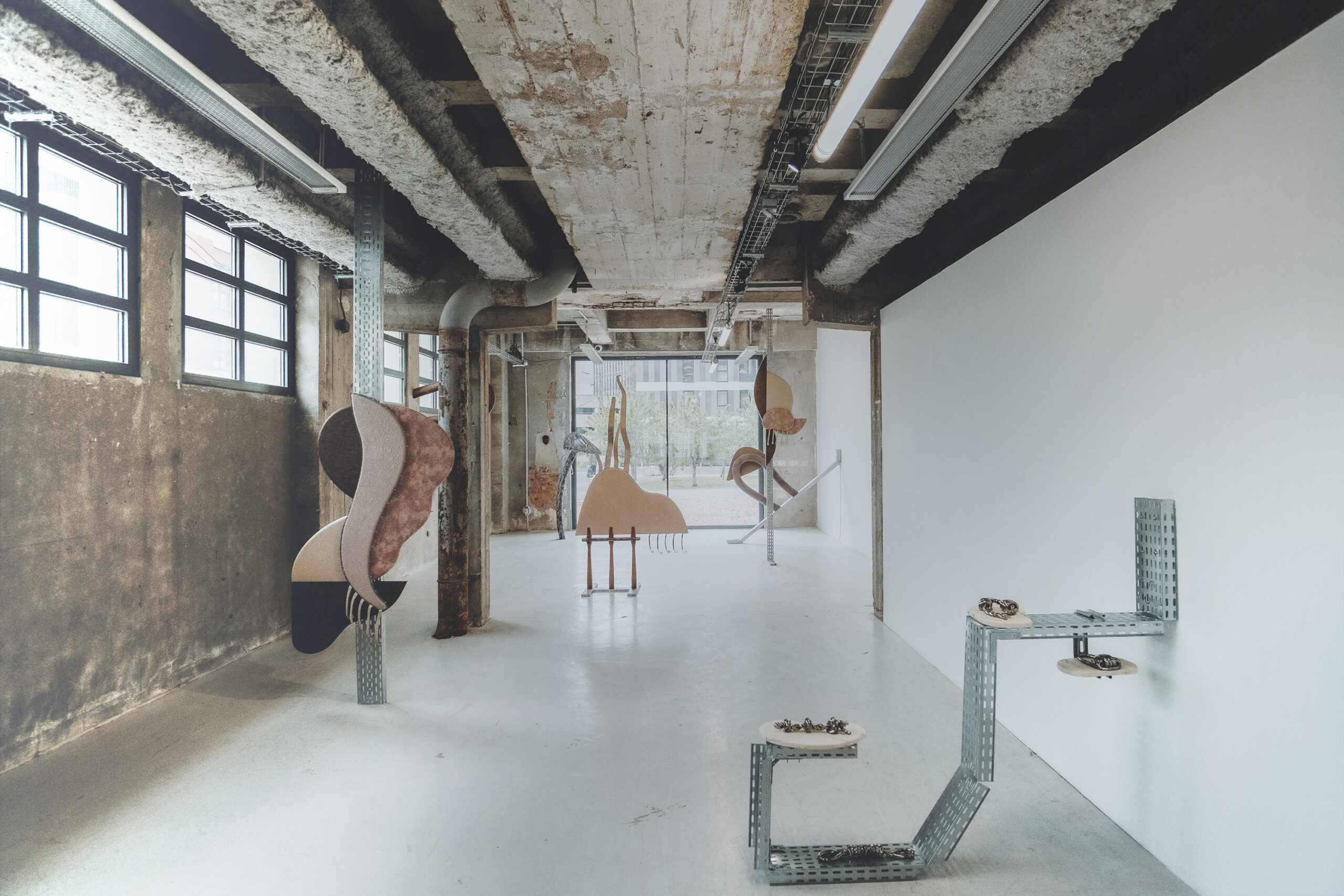
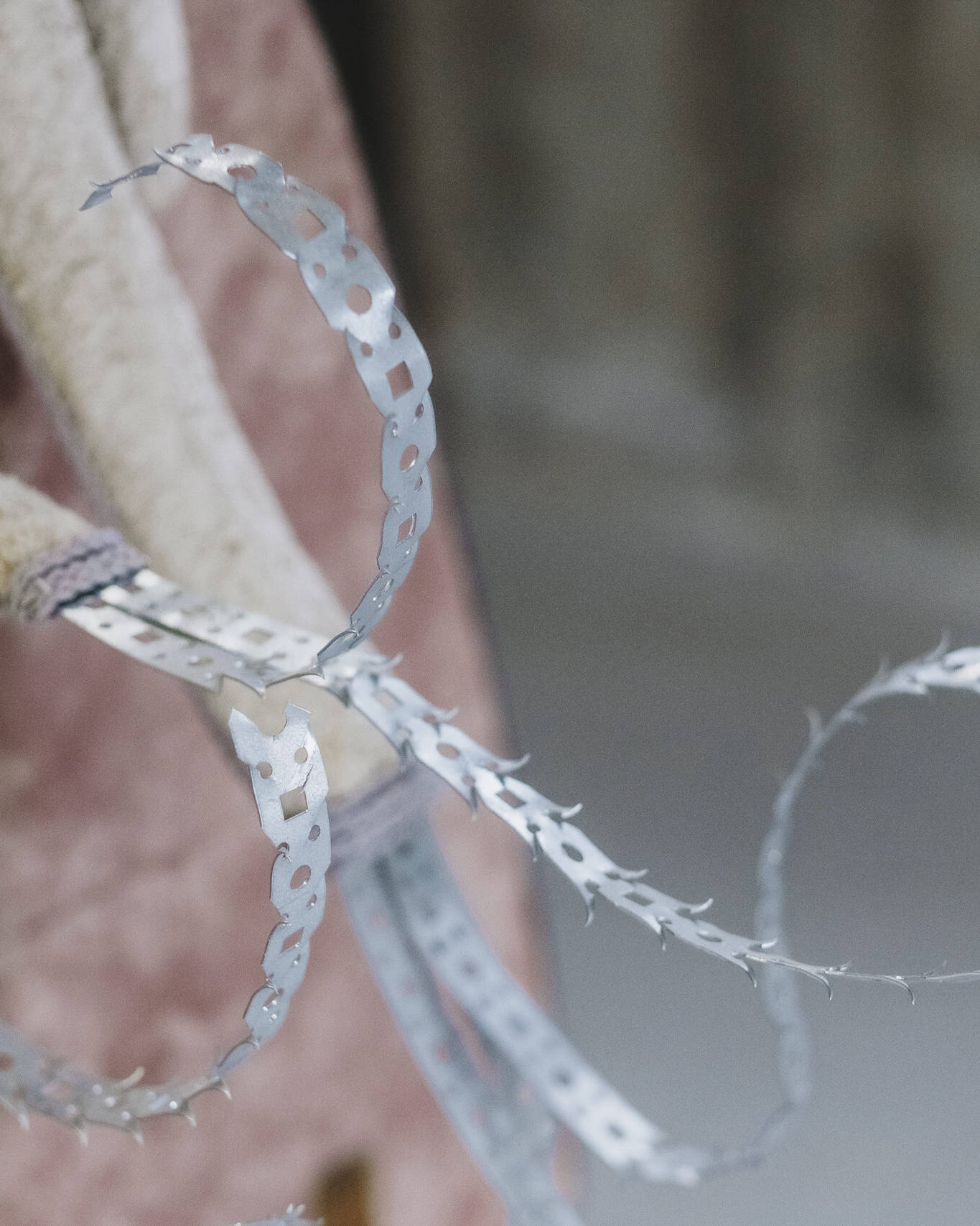
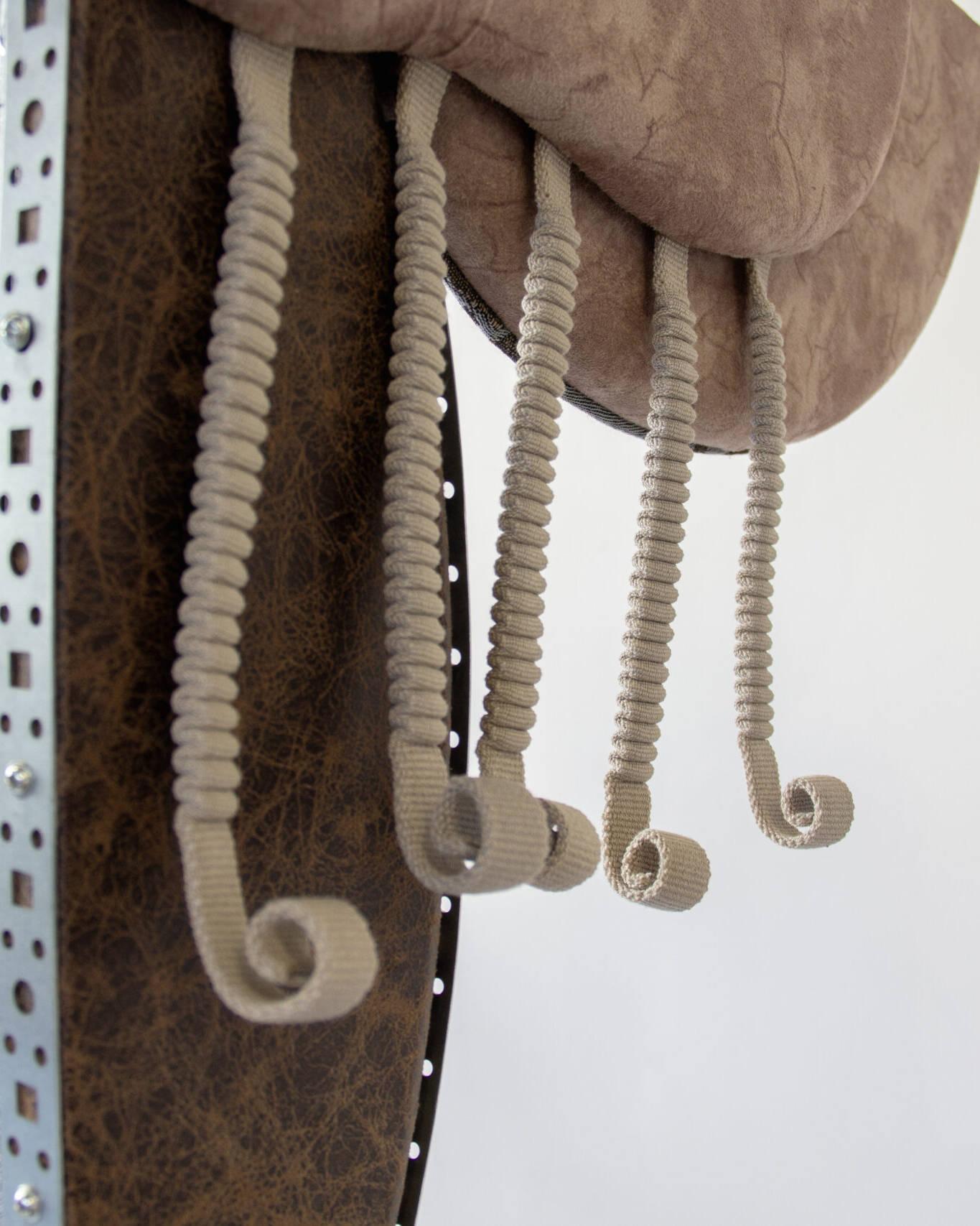
Taking the environment of the Canal Saint-Martin as inspiration, the videosculptures interweave different perspectives, both human and nonhuman, notably through that of the parrot, the whale, or the dog; three characters who meet fictionally in Paris and become roommates.
Not without humour, Sophia Mainka’s practice focuses on the interactions between different forms of life and their ecosystems. Through her work in sculpture and film, she aims to undo the separations between nature and culture, object and subject. Her sculptures also combine certain familiar objects or materials, reconfiguring their functions and questioning their ordinary uses. Taking the environment of the Canal Saint-Martin as her inspiration, her installation interweaves different perspectives, both human and non-human—notably through that of the parrot, the whale, or the dog—in hybrid forms that reflect the sports practice areas present in public space.
Photos by Manuel Abella and Sophia Mainka
Showed at La Chaufferie, Fondation Fiminco, Romainville (2024), GiG Munich
habit loss
habit loss2023
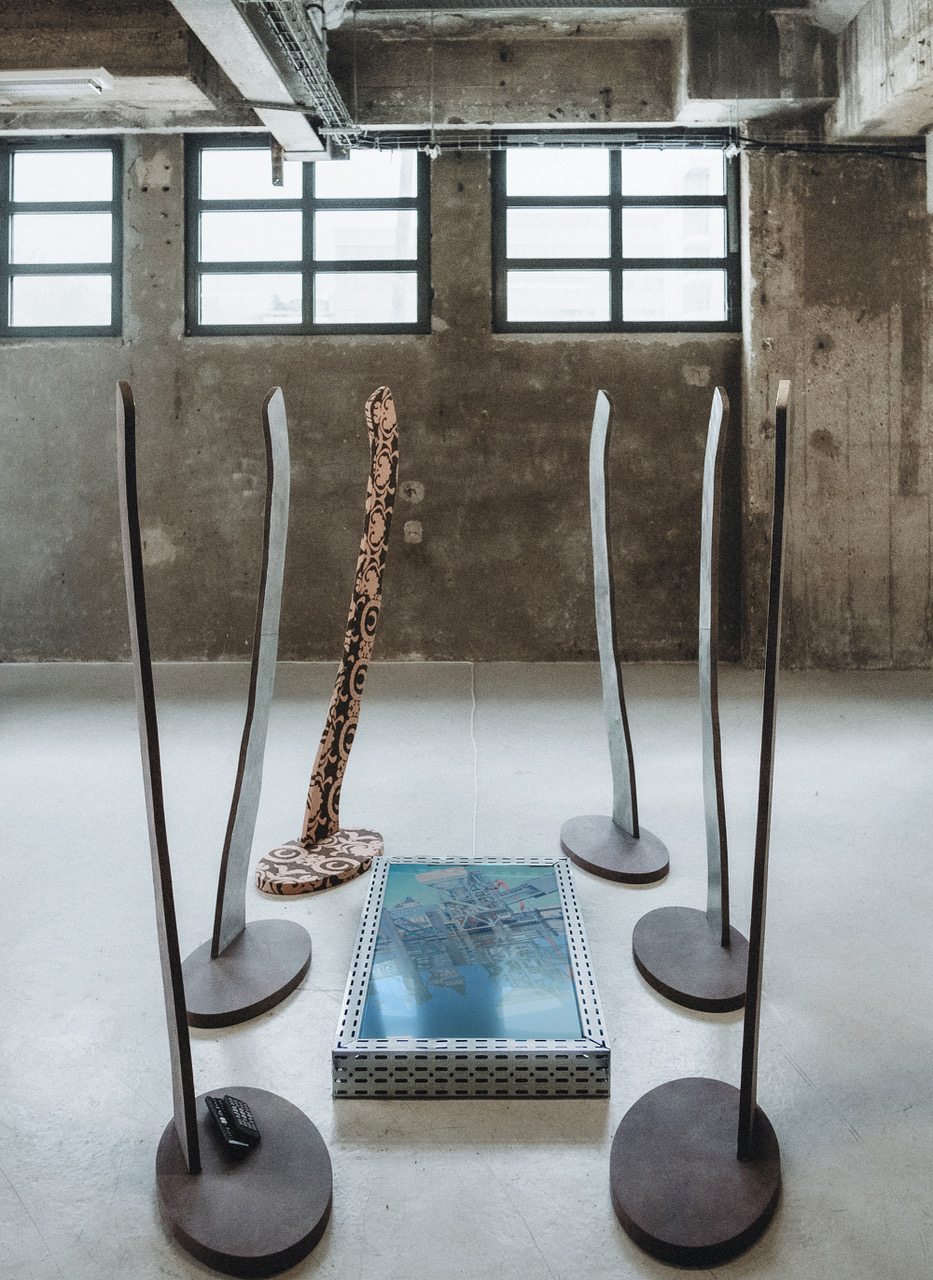
Metal (laser cut), ceramics (glazed), fabric, wood, plastics, acrylic laquer, videos
Series of three video sculptures about the relationship between human and other animals inspired by a text of Rosi Braidotti talking about the three types of relations in the Anthropocene: the animal as friend, the animal as farm animal, the animal as a fantasy figure.
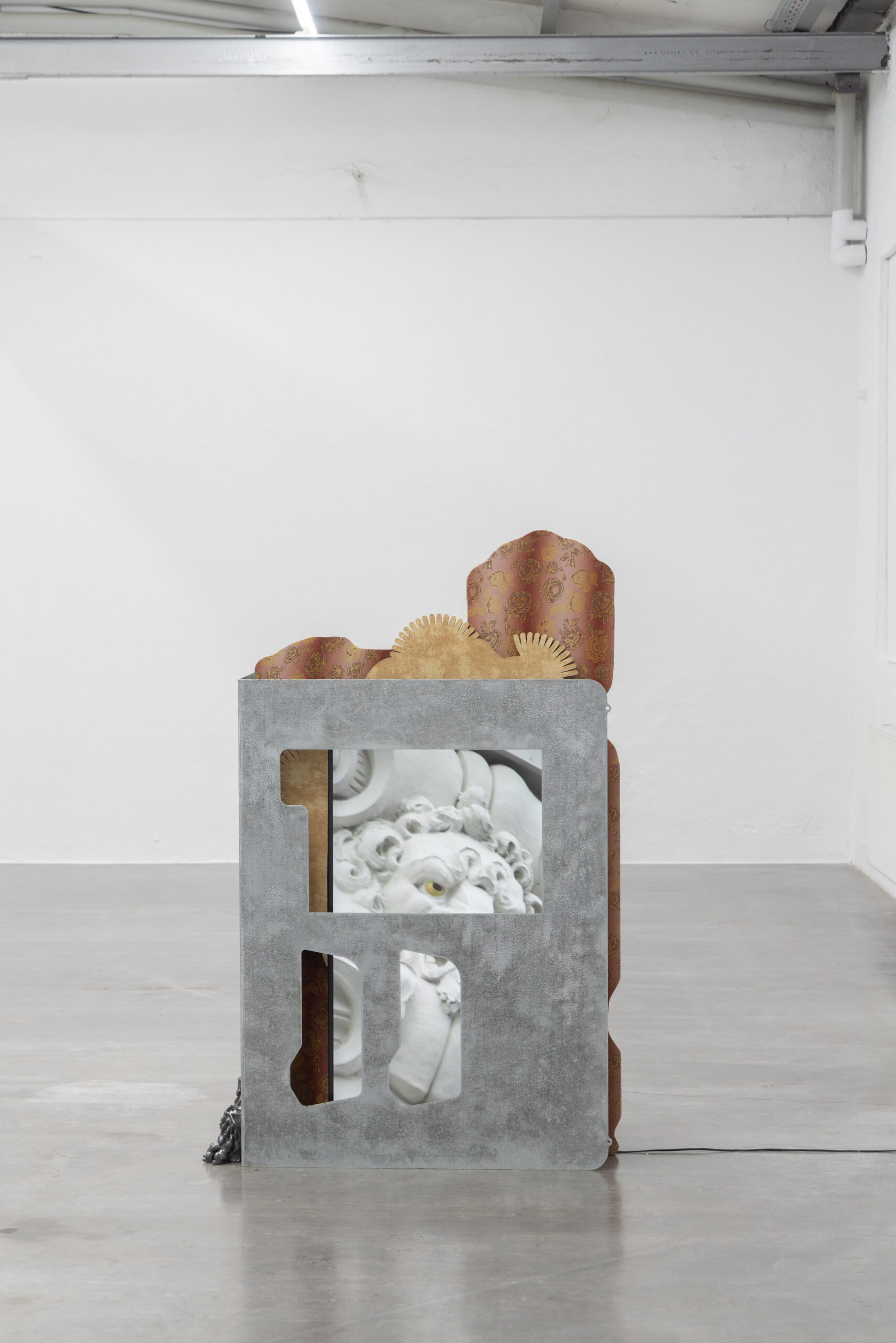
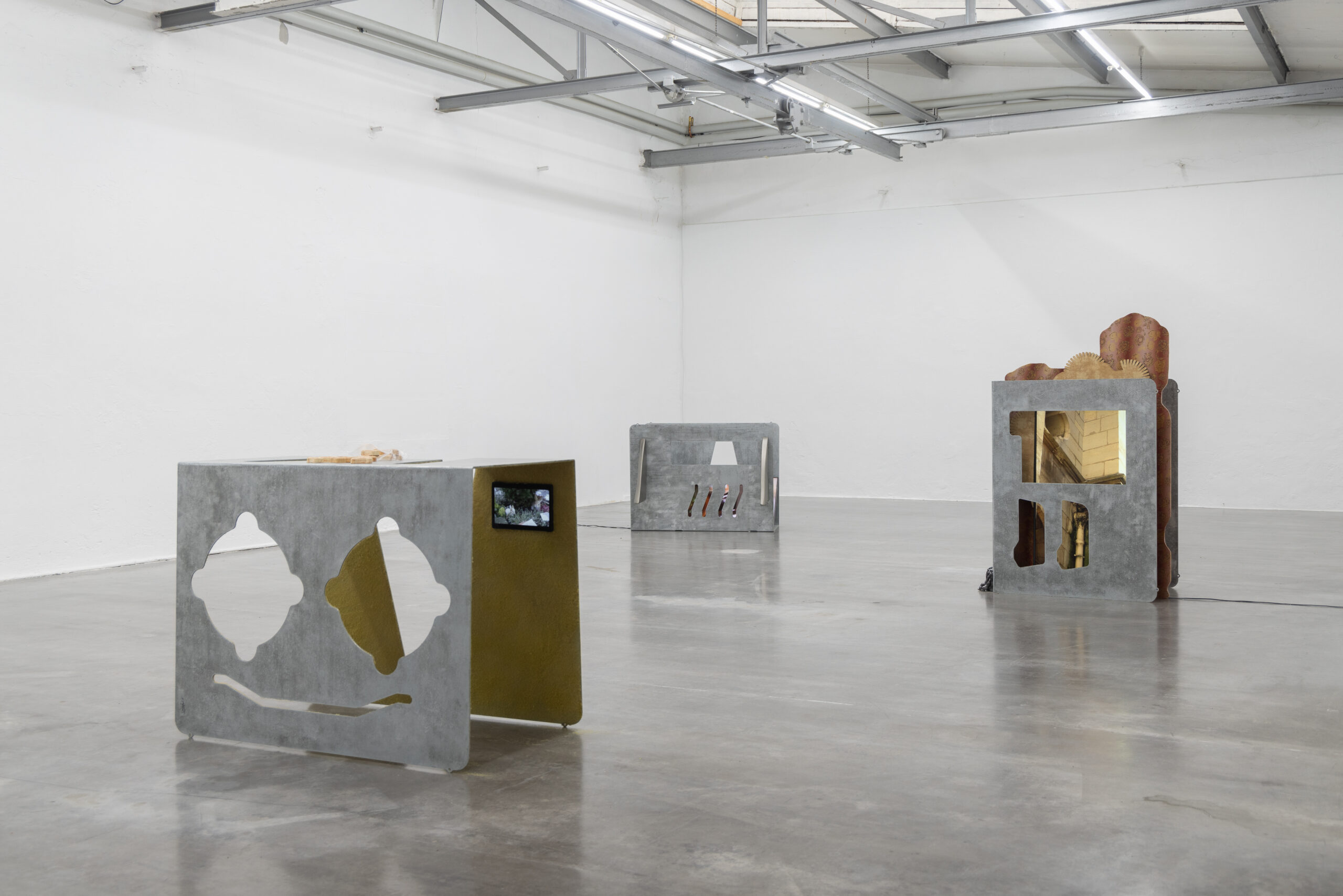
Habit Loss 1 (Lion), full HD, 8.59min, without sound, loop, TV, 50 zoll
video essay filming outside sculptures and gargoyles in Munich and Paris
Habit Loss 2 (Snail), full HD, 13.17min, without sound, loop, TV, 55 zoll
video essay filming a family preparing and eating snails
Habit Loss 3 (cat), fullHD, 6.27min, without sound, loop, tablet
video essay filming the animal cemetery near to Munich
105 x 160 x 59 cm (Lion)
122 x 92 x 90 cm (Snail)
122 x 90 x 60 cm (Cat)
Photos by Thomas Splett and Sophia Mainka
Shown at Kunsthaus Dahlem (2025), Lothringer Halle 13 (2023-24),Artissima,Turin (2023)