Lea Grebe
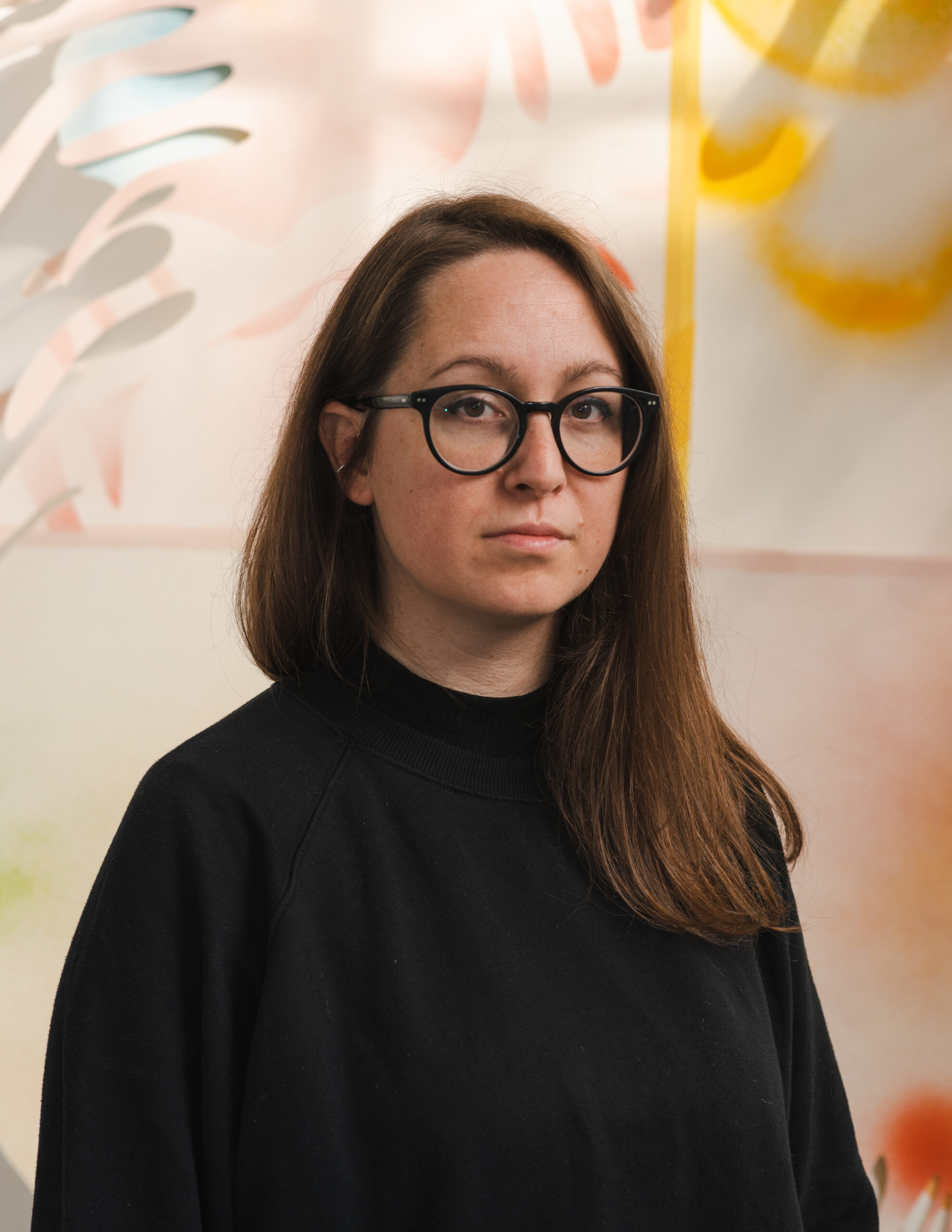
Lea Grebe (b. 1987, Munich, Germany) lives and works in Munich.
Lea Grebe studied Painting and Graphics at the Academy of Fine Arts Munich under Prof. Axel Kasseböhmer, completing her studies as a master student in 2018. She also holds a Magister Artium in Art Education, Art History, and Modern German Literature from Ludwig Maximilian University of Munich.
Lea Grebe has received grants and scholarships from the City of Nuremberg, Stiftung Kunstfonds, and the State of Bavaria (Cité des Arts, Paris). Her work has been shown in institutions such as Kunsthalle Mannheim, Museum Sinclair-Haus, and Museum Wiesbaden, and is represented in the Collection of the Federal Republic of Germany
Persistent Traces
Persistent TracesArt Brussels 2026Booth 5A-17
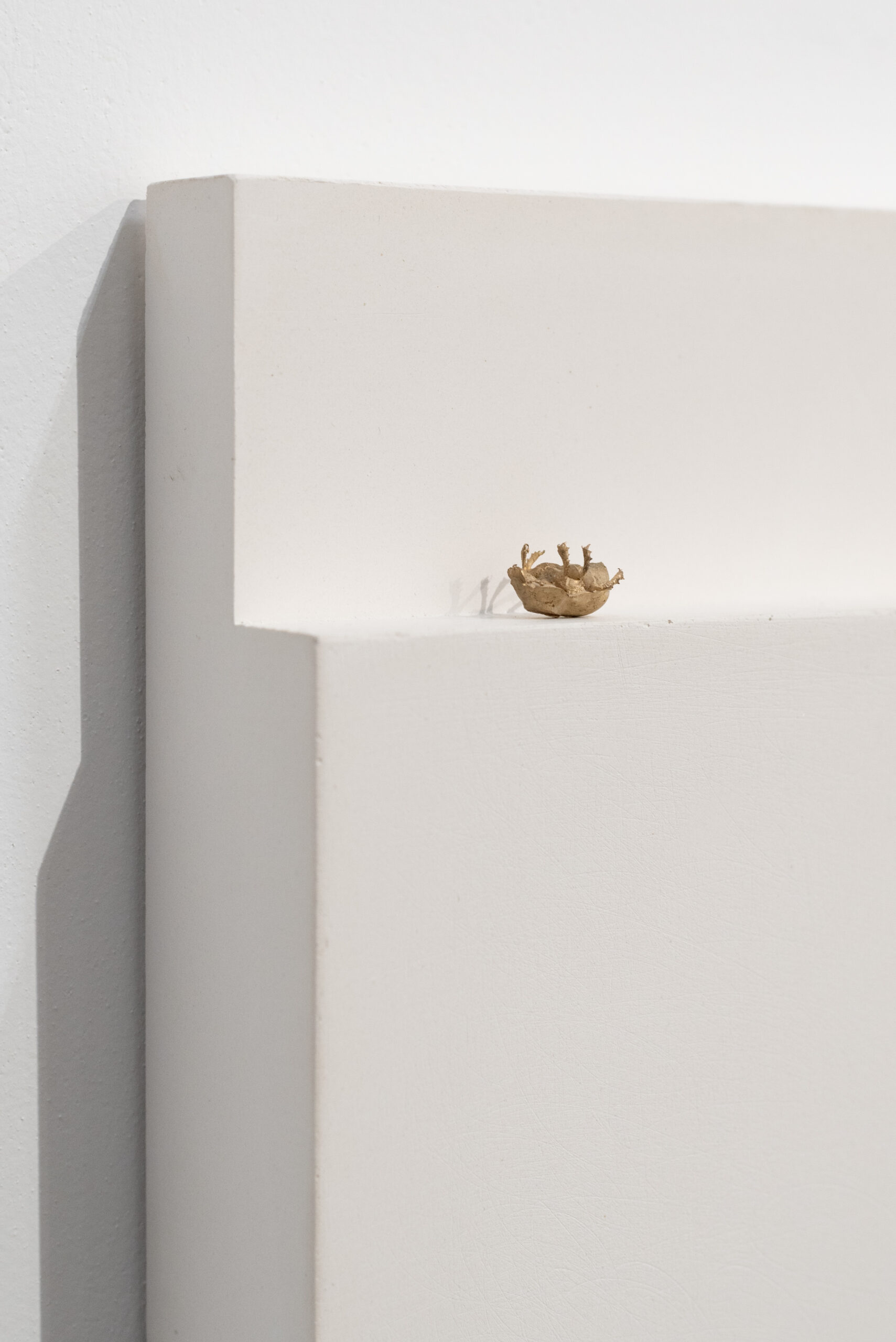
Lea Grebe’s art deals with the observation of nature at the intersections of science and technology. Based on the artist’s personal archive of insects found dead, which was built over the last couple of years, a wide variety of questions for new works emerges. For her, the class of insects is exemplary of the creatures that surround us and the ecosystems they animate. Insects reflect and analyse man’s interest in the orders imposed by nature. Her small bronze sculptures of individual animals and plants refer to a reprocessing of nature that transforms living flora and fauna into relics of conservation and musealisation.
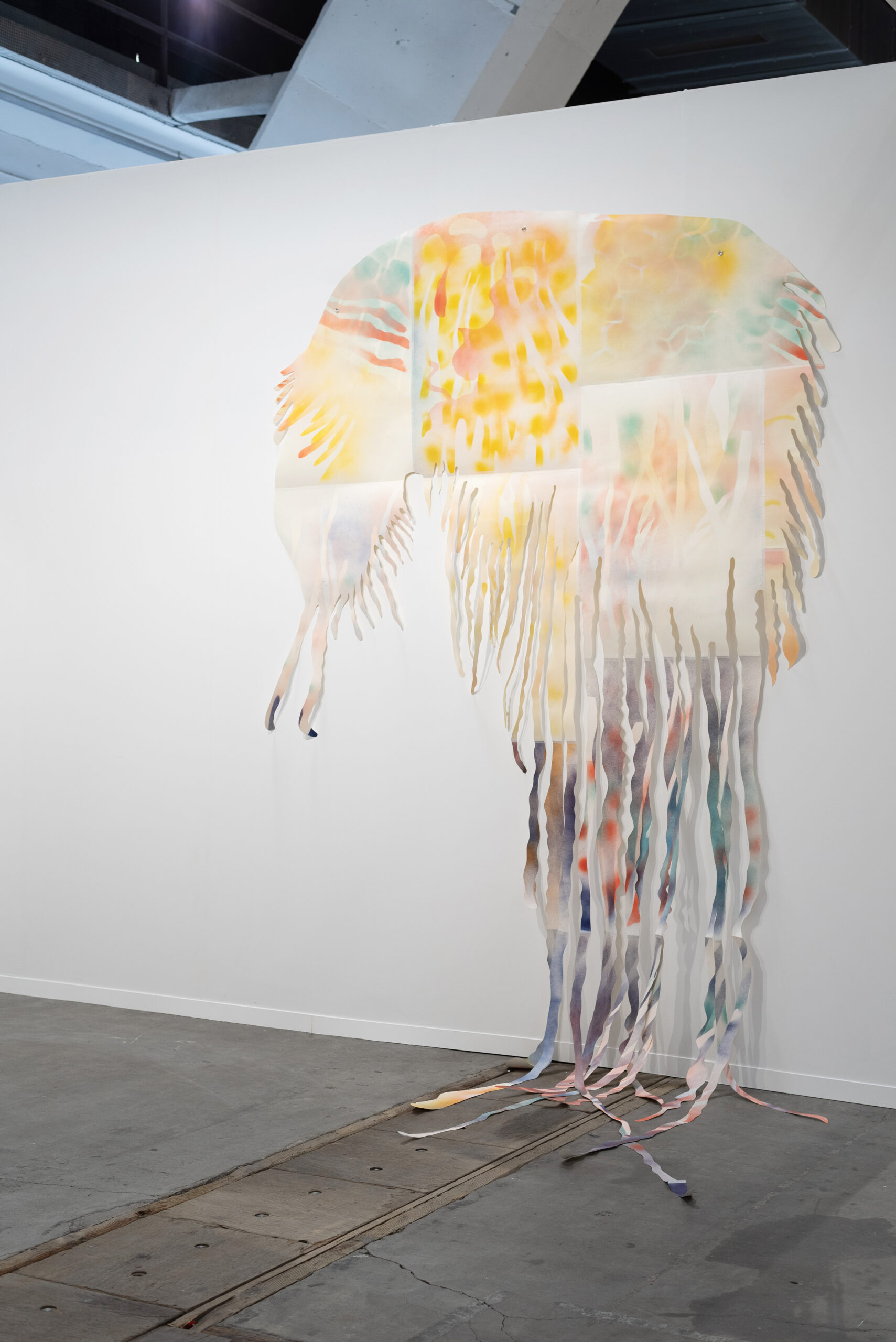
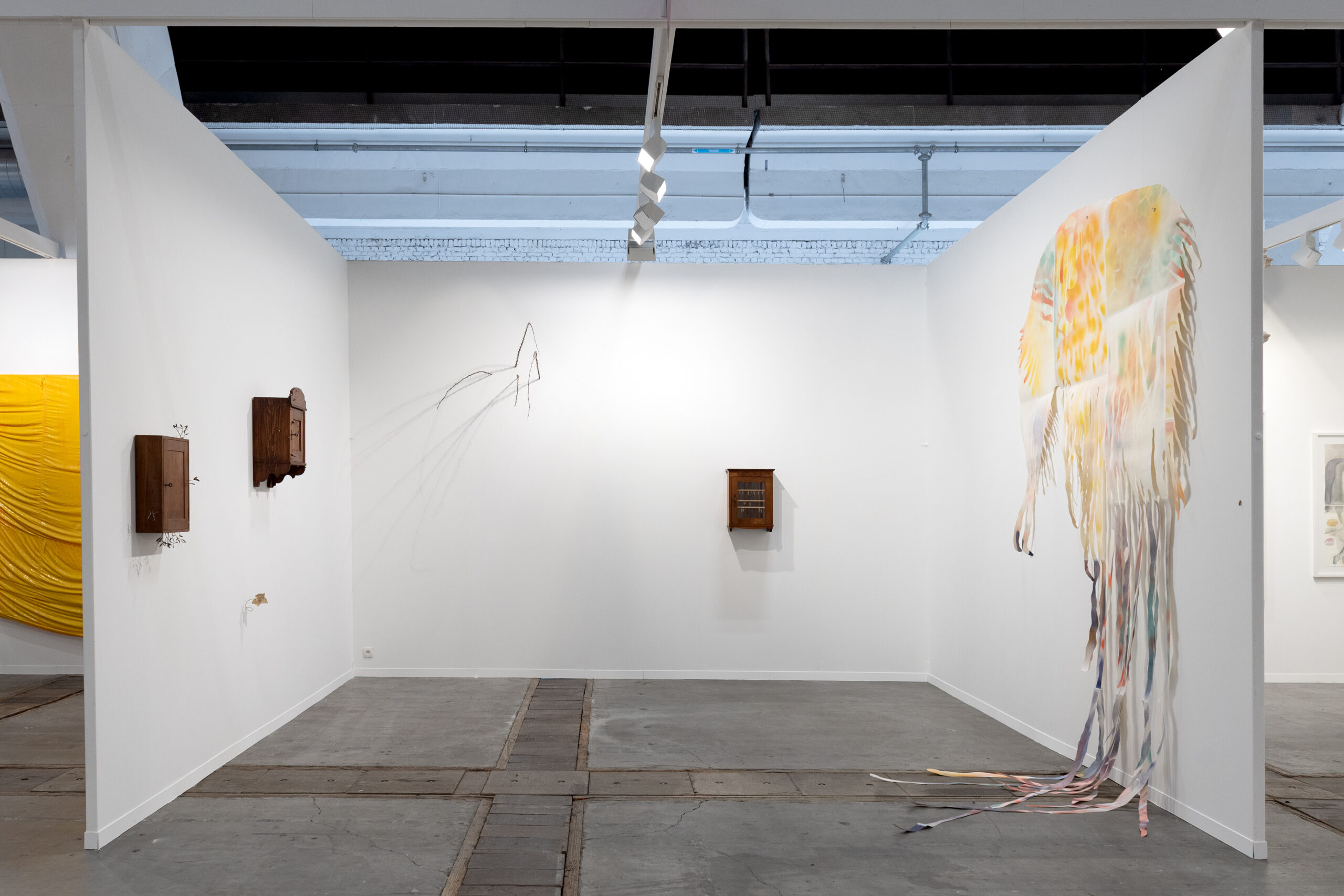
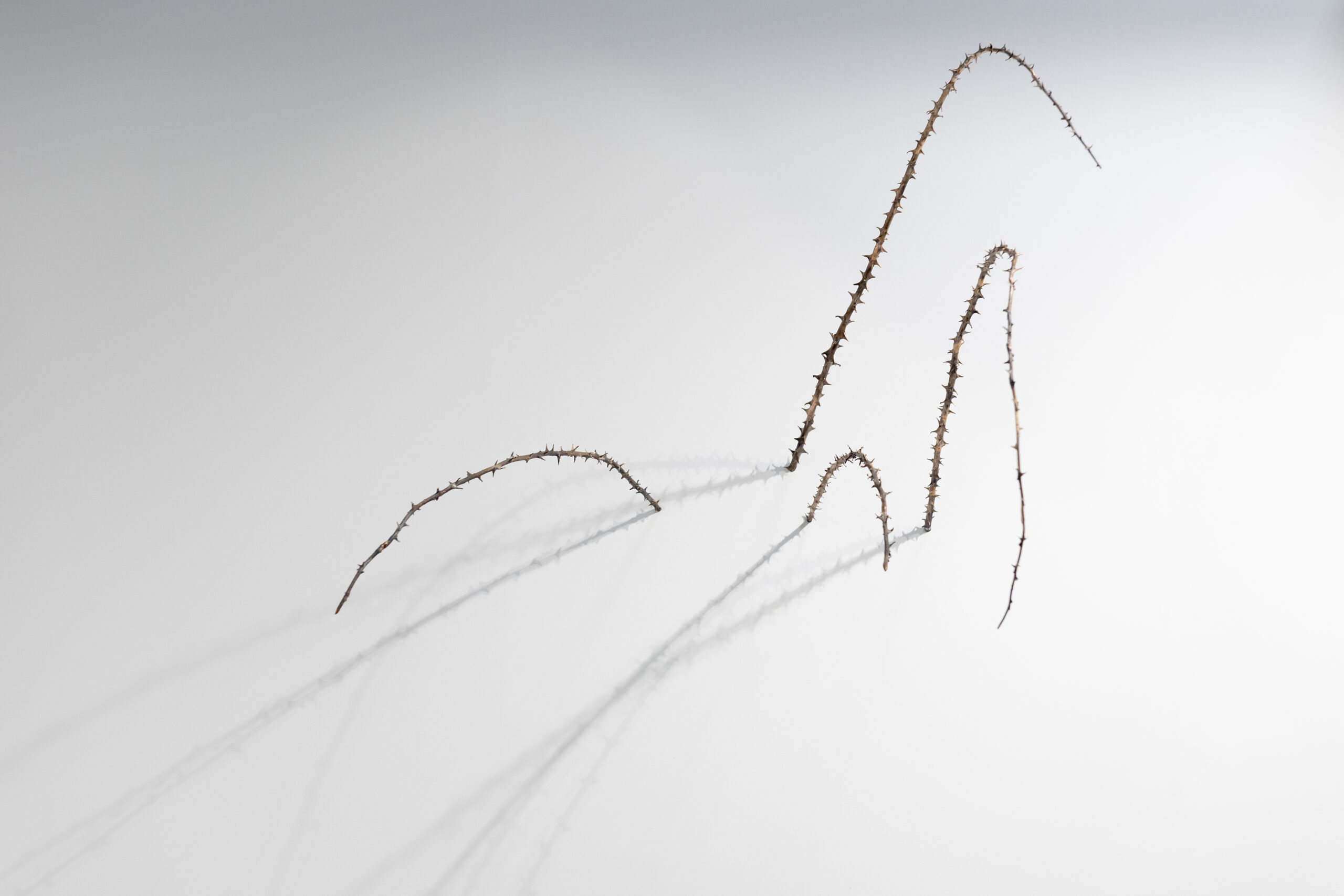
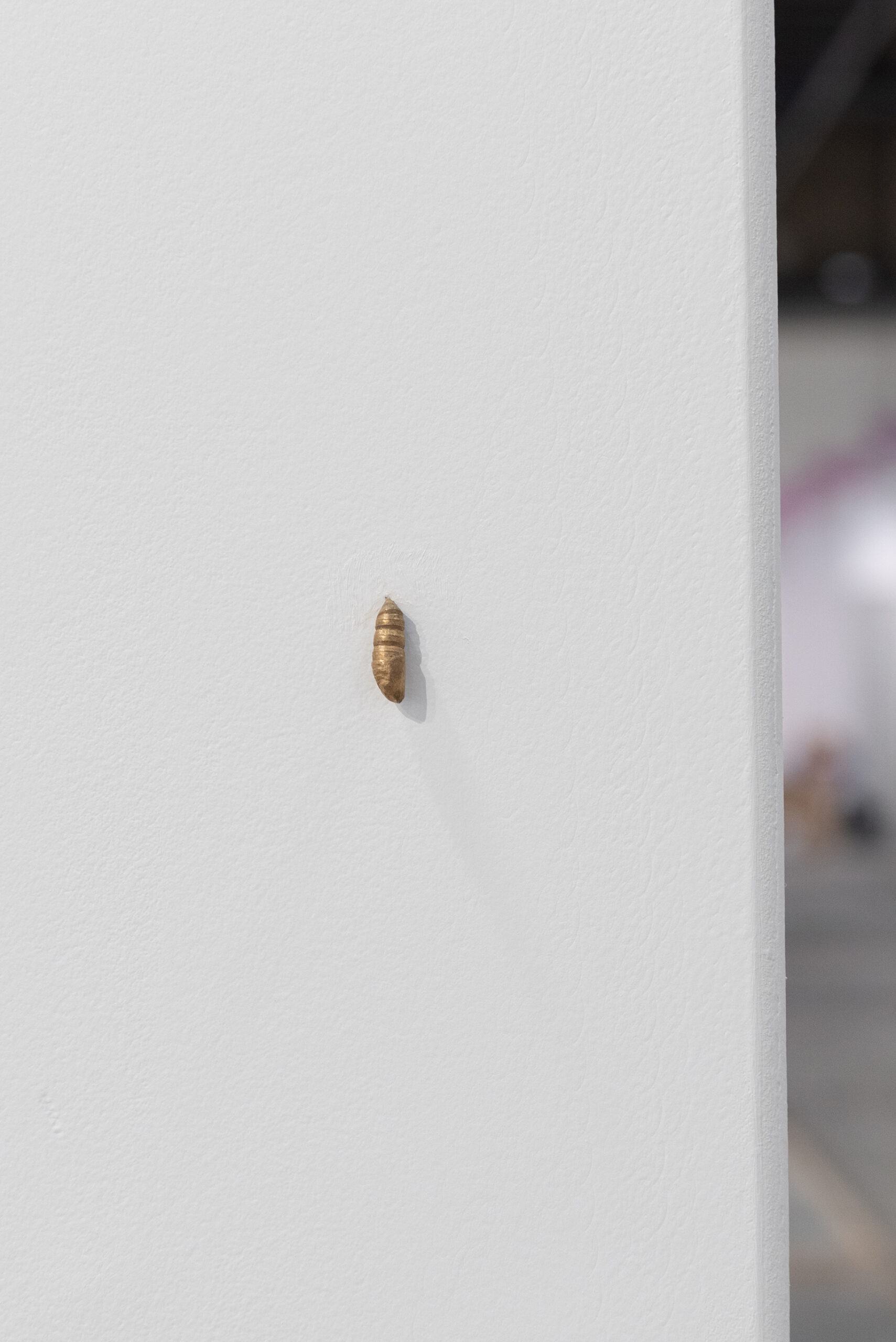
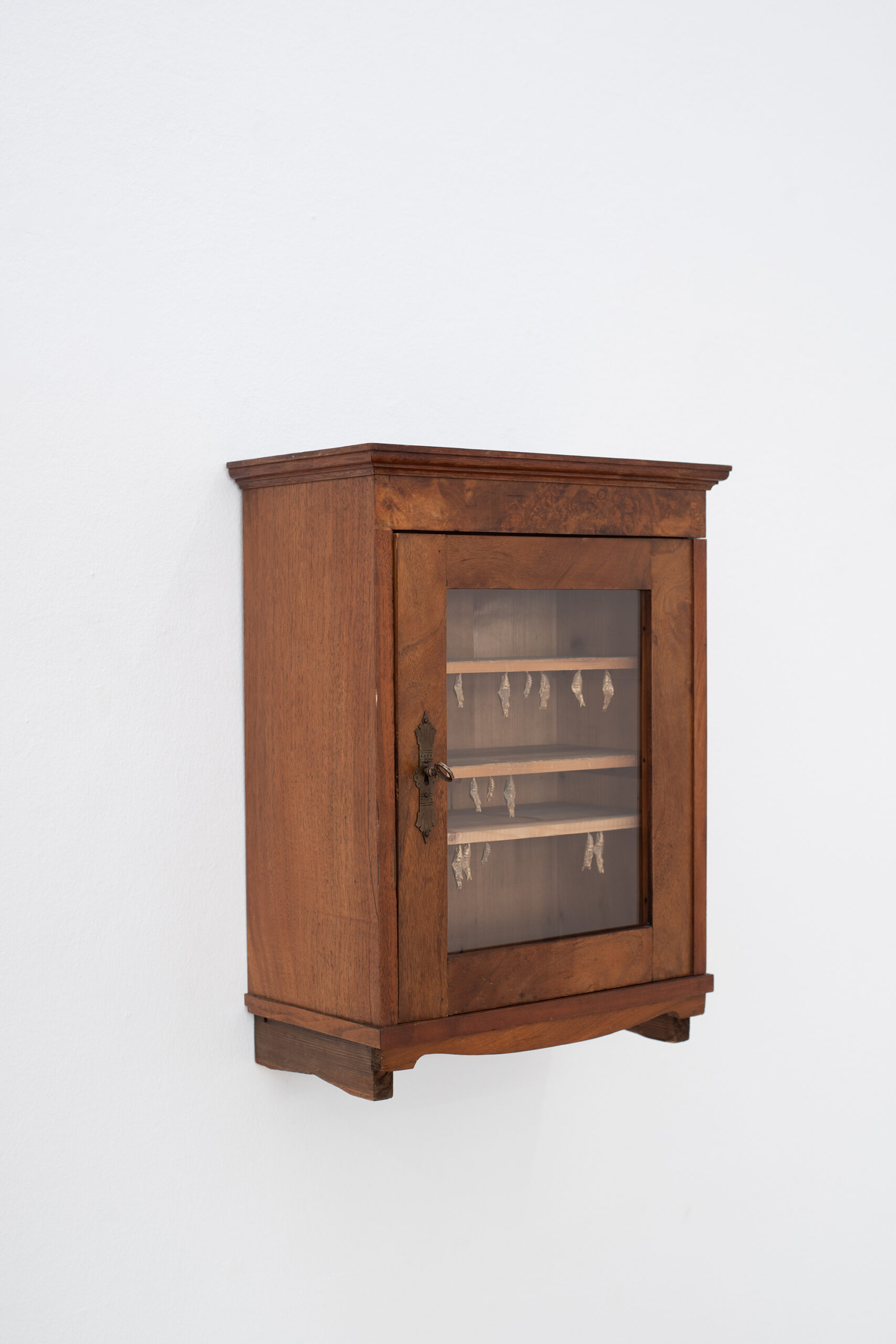
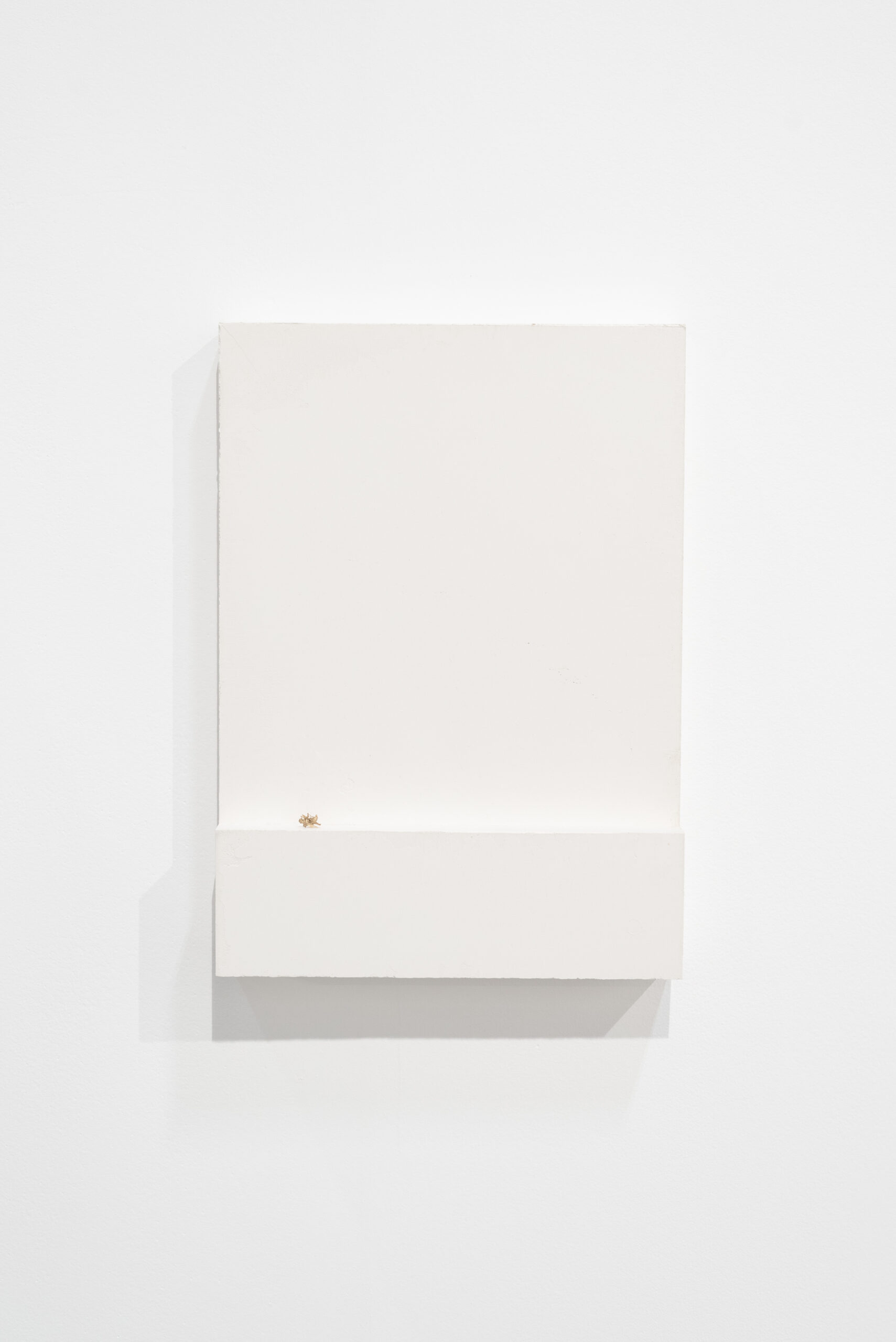
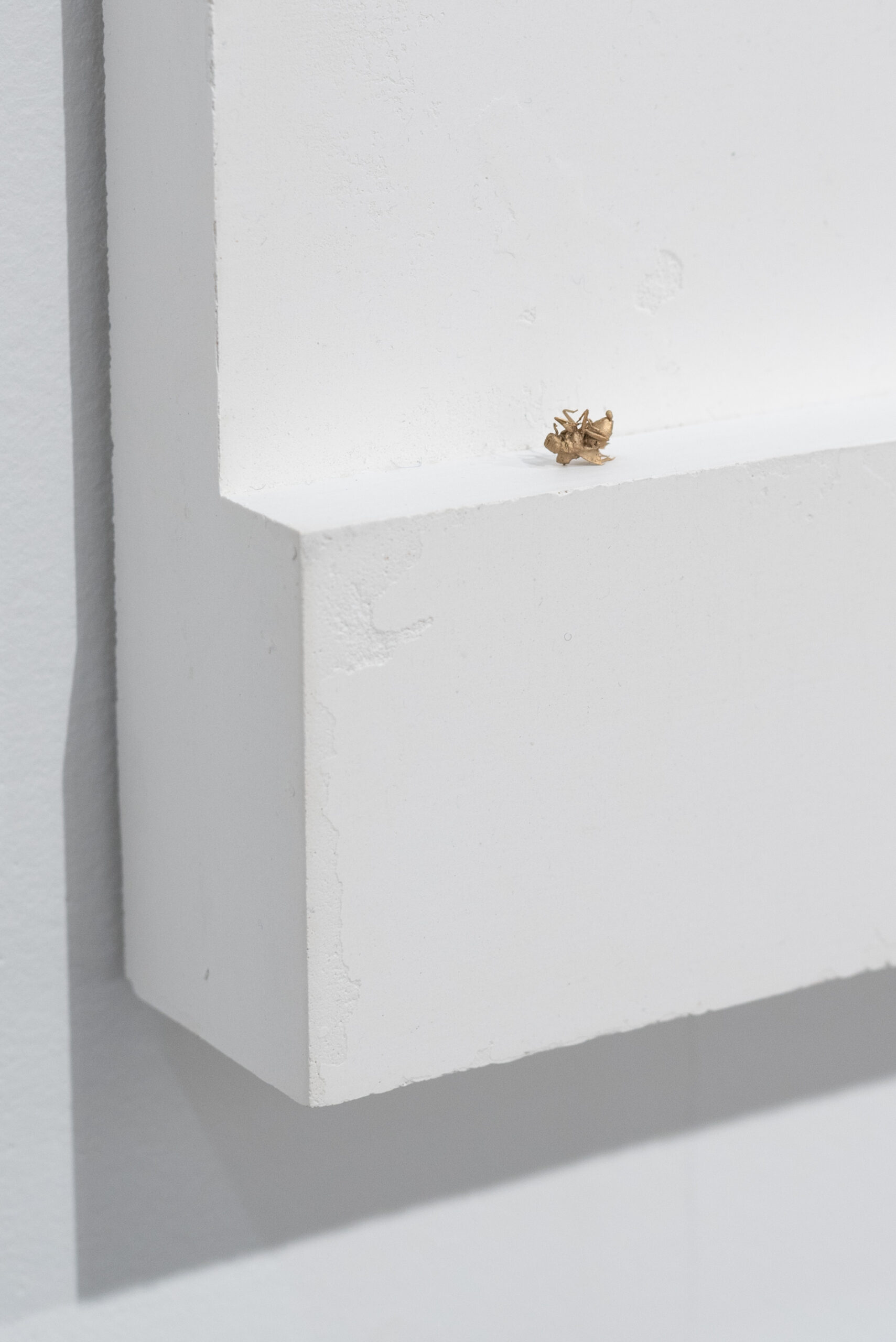
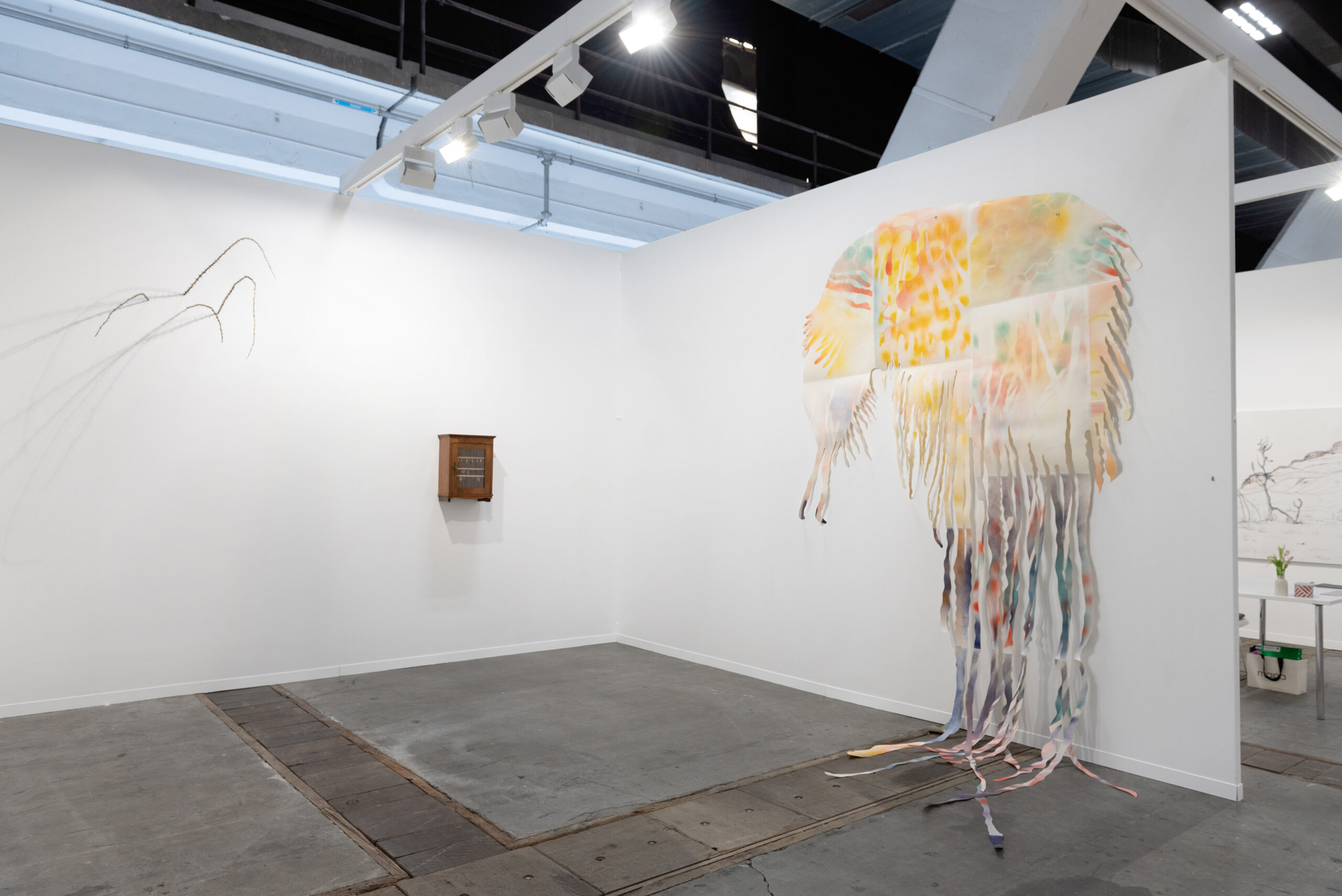
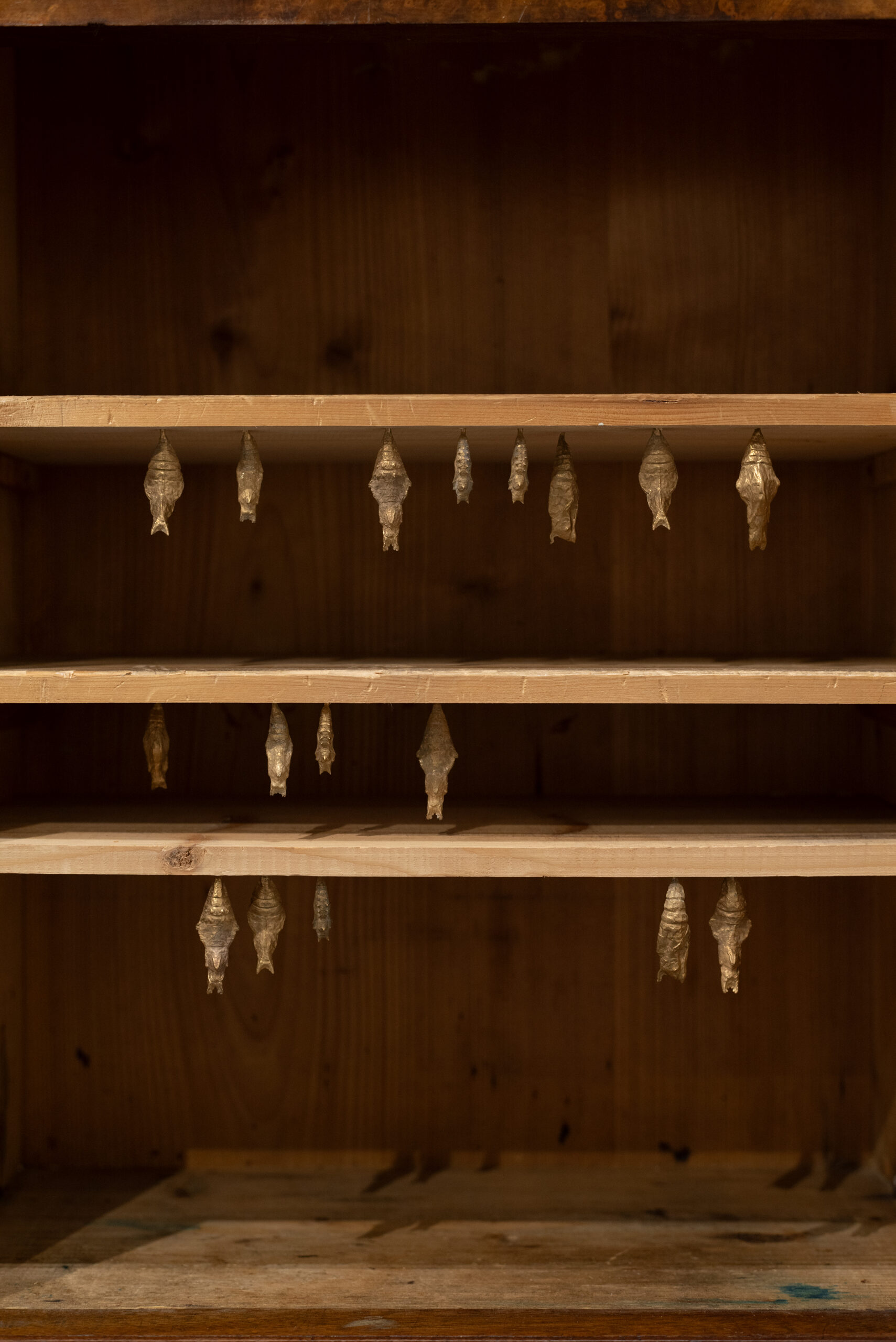
In her recent works, Grebe creates hybrid objects that merge biological motifs with domestic furniture forms. Cabinets and vitrines become habitats for bronze-cast fungi, galls, and cocoons, appearing to grow from within and transforming utilitarian objects into living environments. By using materials such as wood, glass, and bronze, Grebe inverts traditional hierarchies of sculpture. Bronze, a material of permanence, preserves ephemeral organisms and reveals the delicate balance between preservation and decay, dominance and vulnerability, culture and nature. Her works envision a world where the boundaries between naturalia and artificialia blur, exposing how cultural and biological histories are deeply intertwined.
Fascinated by collaborative interactions between animals and plants, Lea Grebe conceives works that examine these symbioses between animals and nature as models for human behaviour. Central to her work is the concept of transformation, a state that harbours the possibility and hope of change. For her, however, it is also “about the search for new ecological empathic ways of thinking. The aim is to imagine a world view that is not human-centred.
The aim is to imagine a world view that is not human-centred.The aim is to promote a perception that is not only focused on oneself, but also on the other, the counterpart and also the alien.”
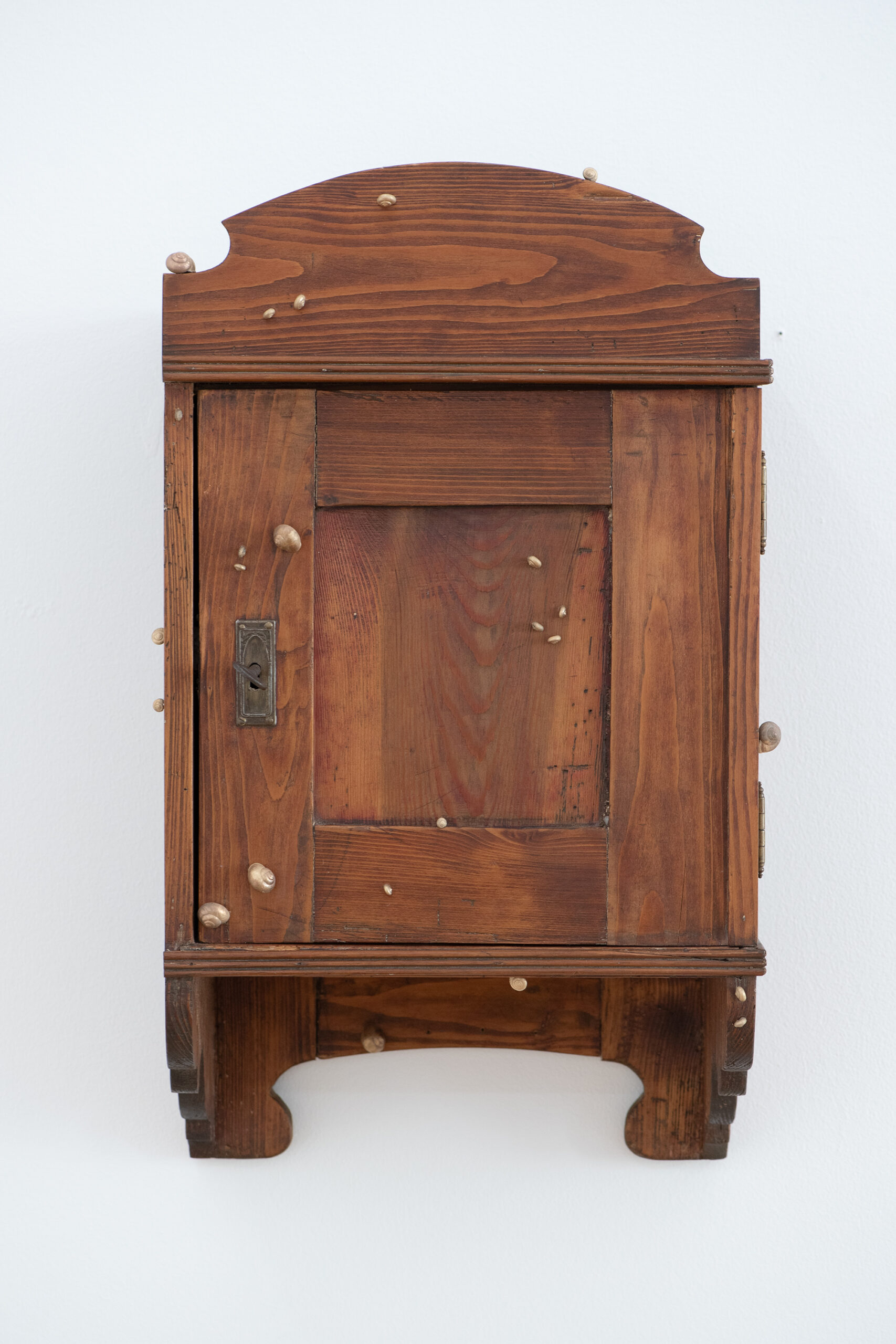
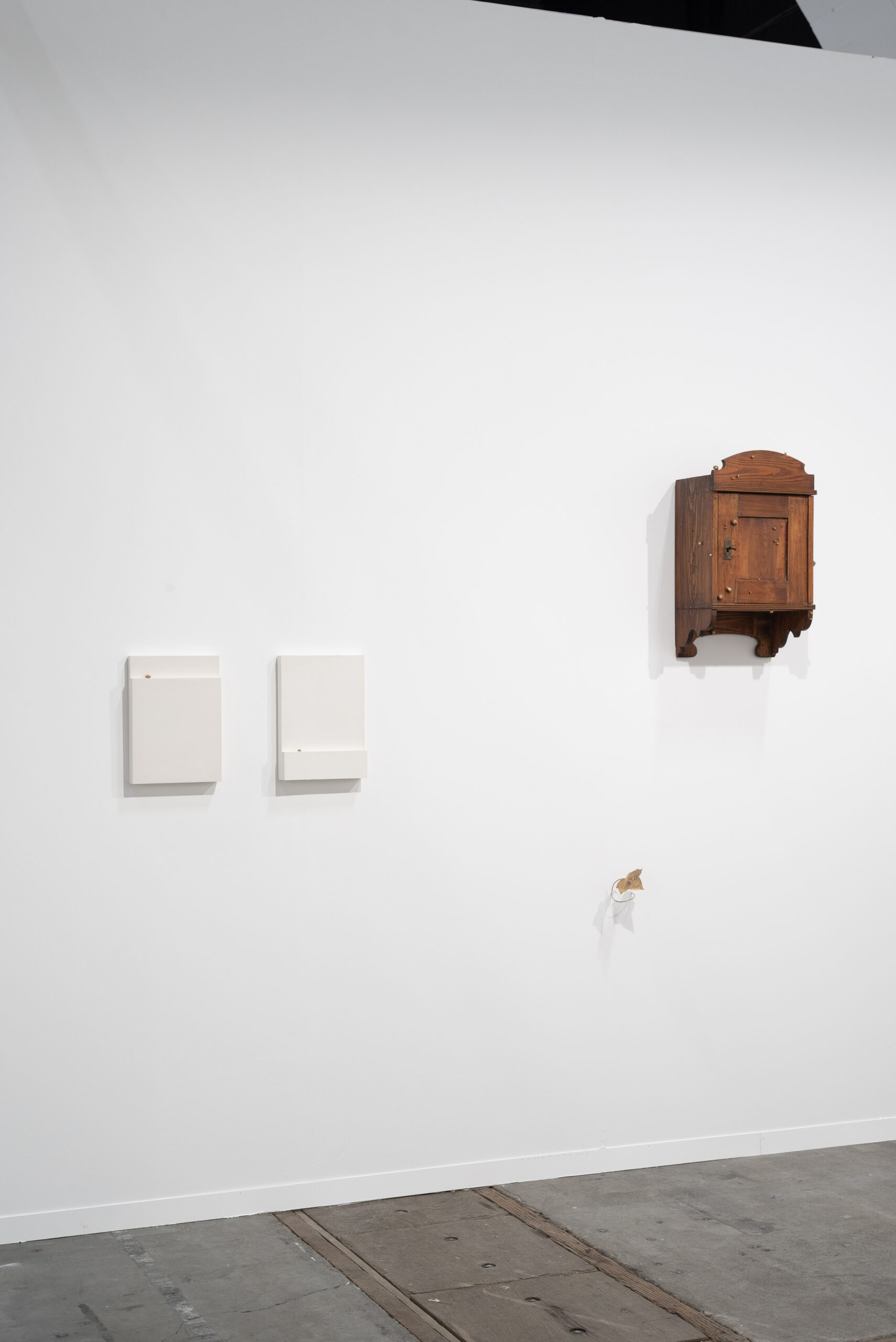
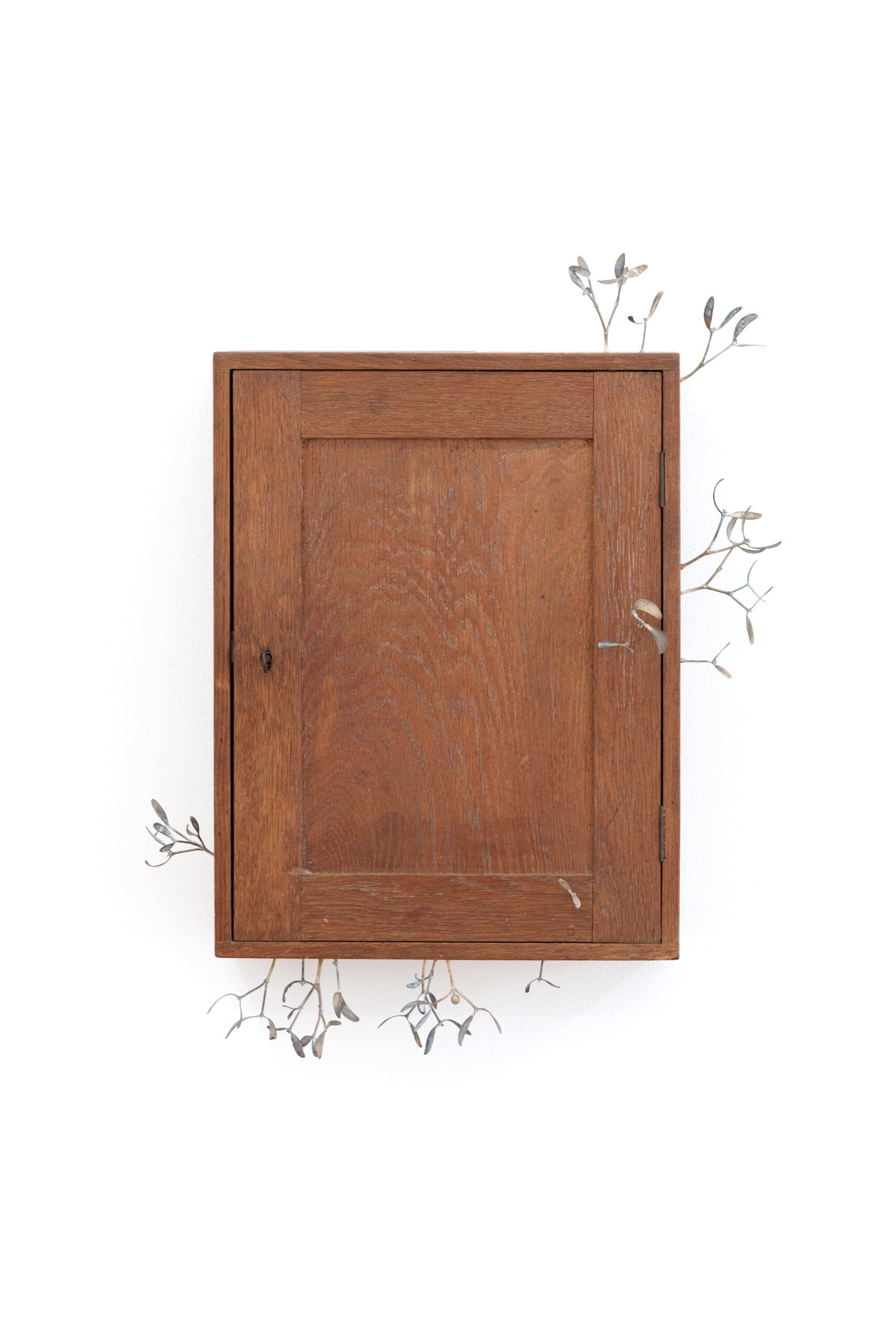
Cabinet V (Mistletoe)
wood, bronze
2026
65 x 50 x 20 cm
6.600€ plus VAT
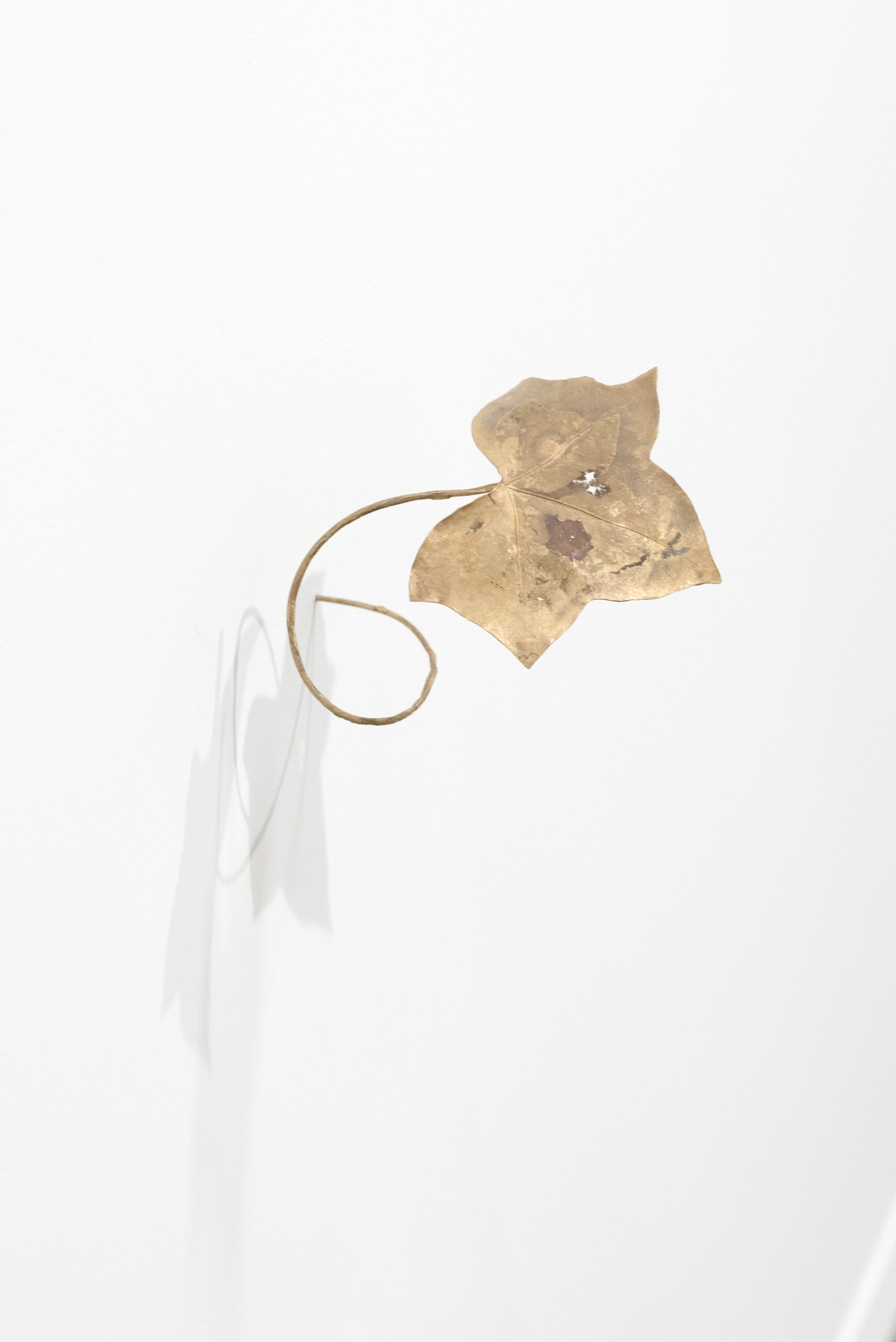
Intruder (Ivy)
2025
bronze
14 x 16 x 20 cm
1.750€ plus VAT
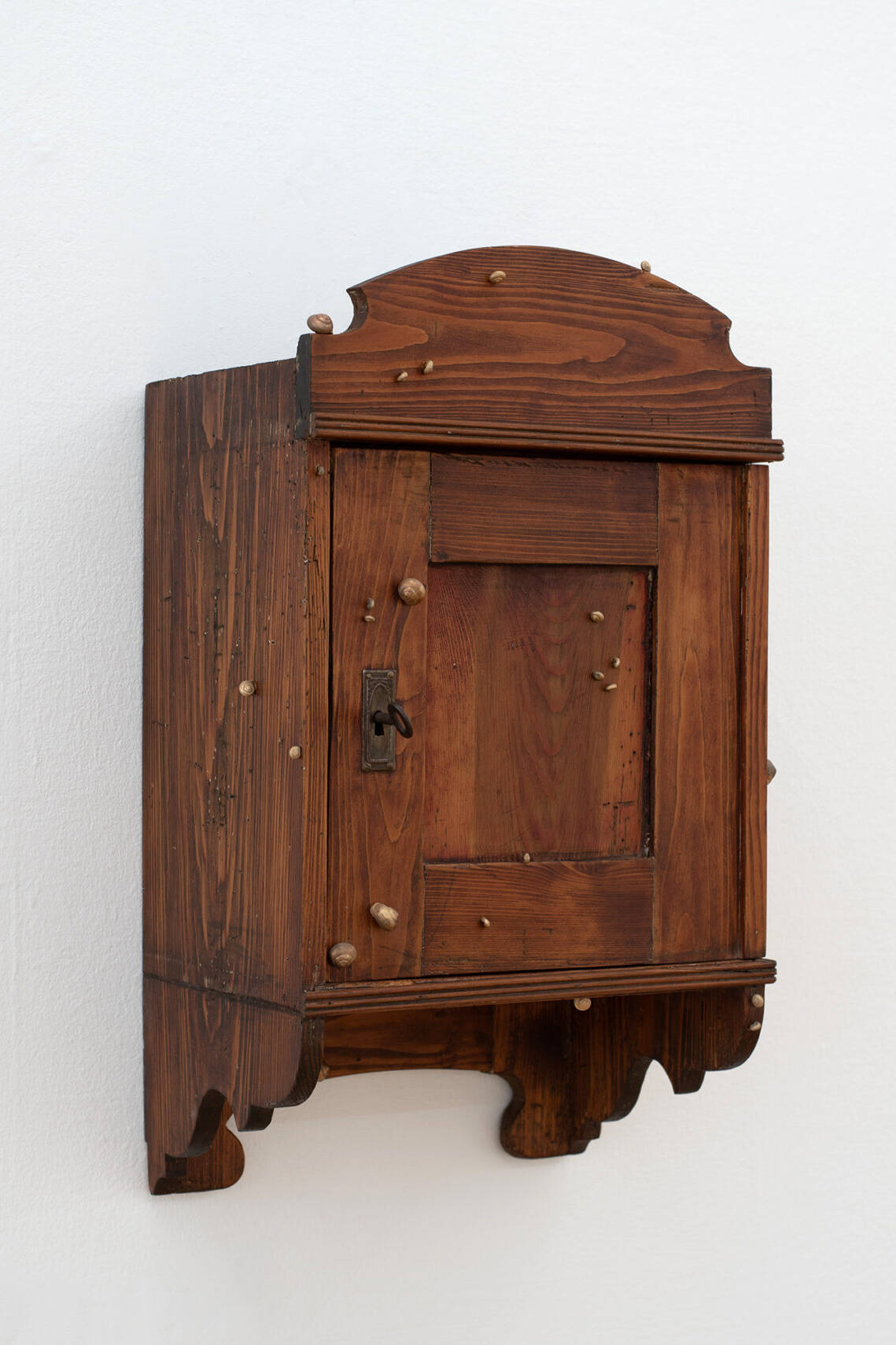
Cabinet IV (Snails)
2025
wood, bronze
60 x 36 x 24 cm
6.600,00 € plus VAT
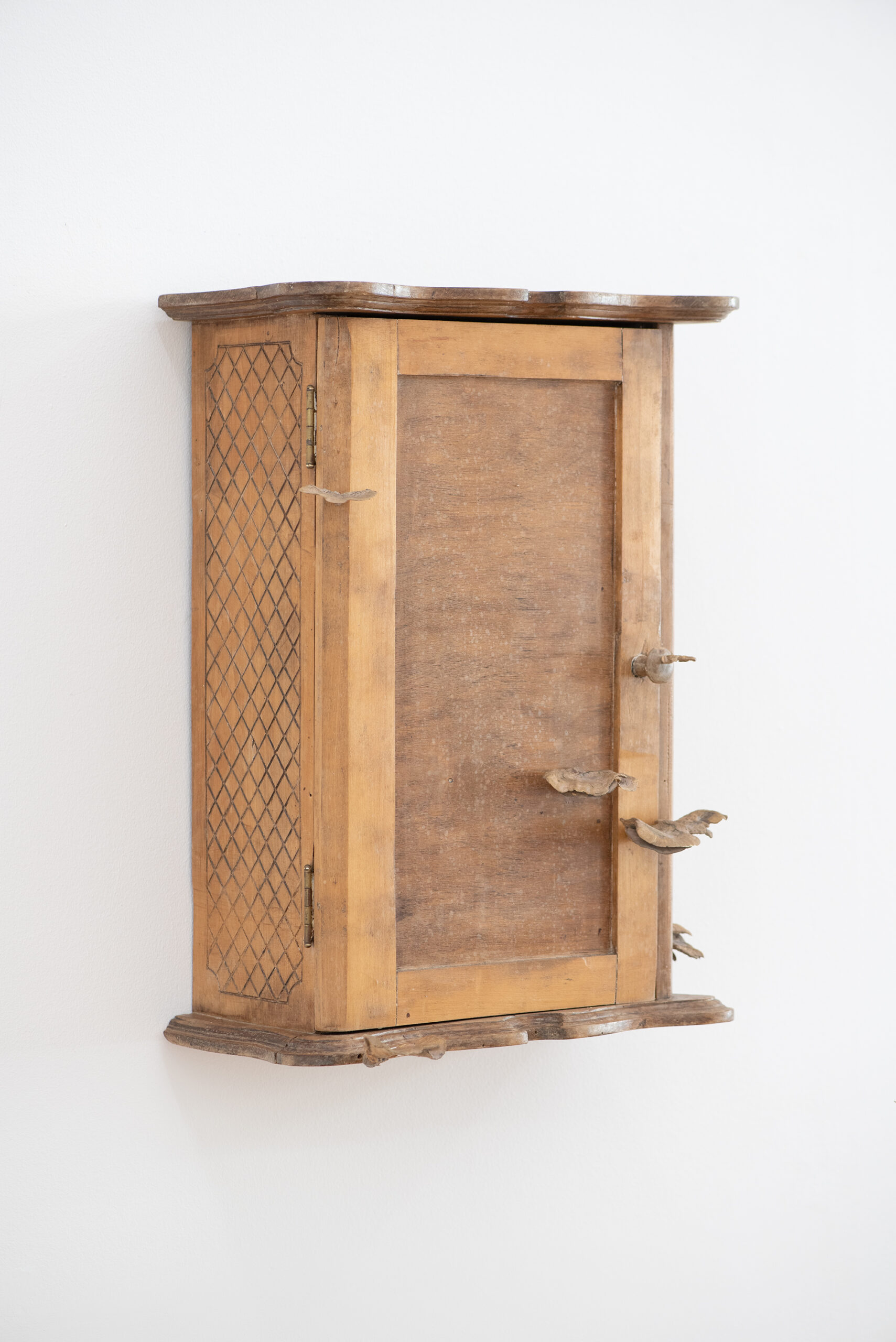
Cabinet III (tree fungus)
2025
wood, bronze
53 x 43 x 18 cm
6.600€ plus VAT
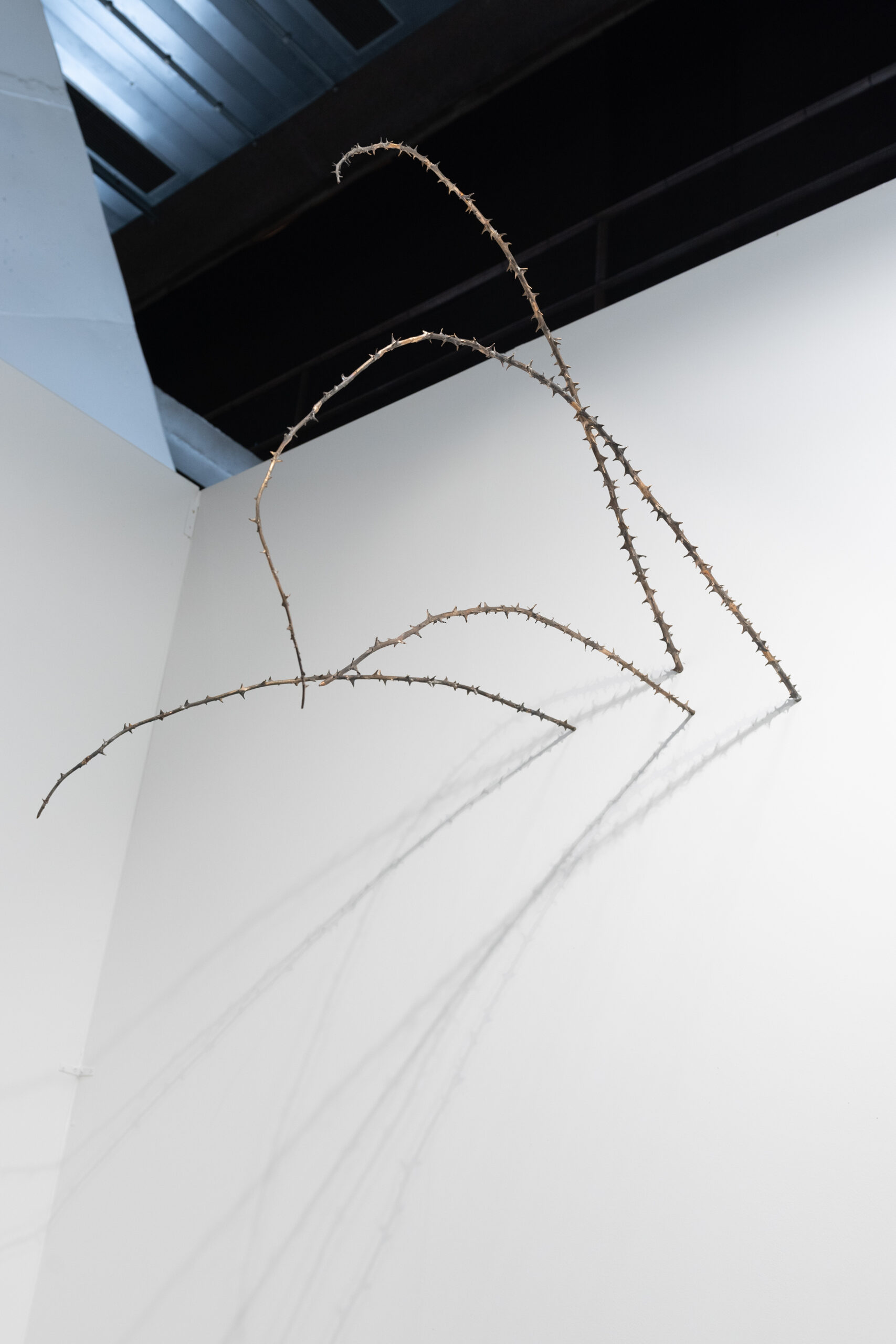
Intruder I (Rose branches)
2024
bronze
110 x 70 x 100 cm
7.800€ plus VAT
Cabinet II (cocoons)
2025
wood, bronze, glas
53 x 43 x 18 cm
10.400€ plus VAT
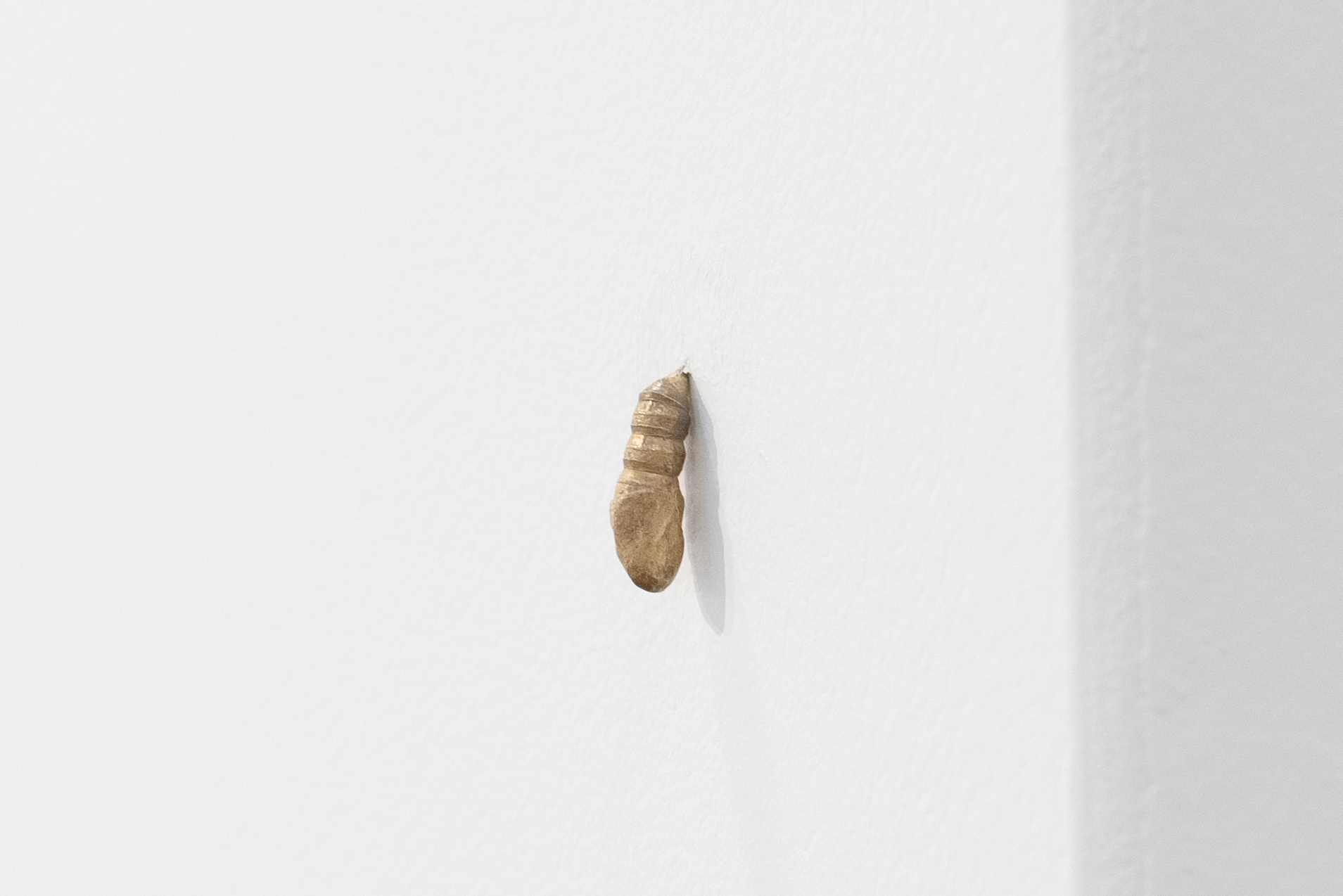
Aglais urticae
2025
bronze
2,8 x 0,8 cm
970€ plus VAT
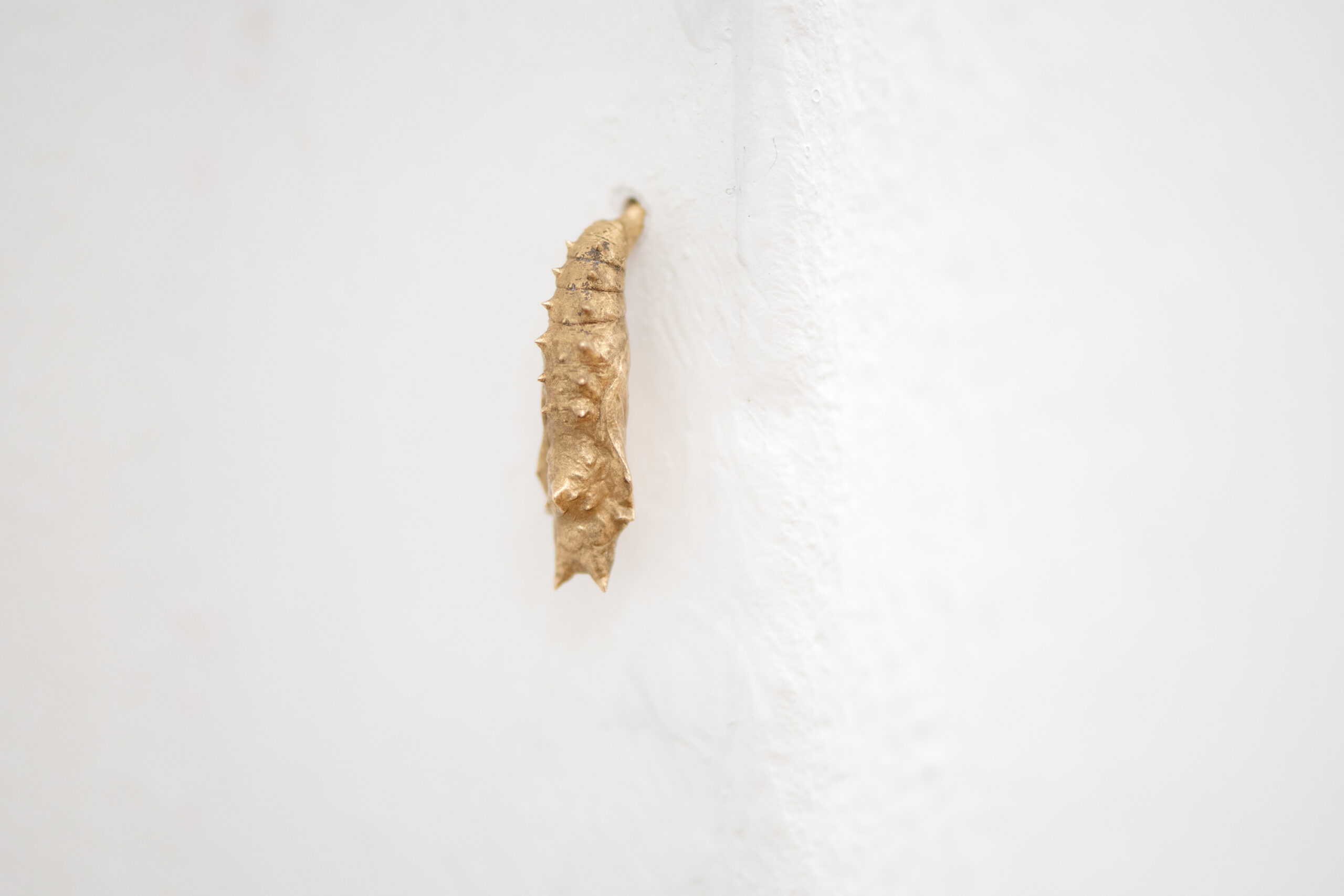
Aglais urticae
2025
bronze
2,5 x 0,5 cm
970€ plus VAT
Hybrid VIII
2025
paper, acrylic paint, metal eyelets,
380 x 250 cm
10.000€ plus VAT

Shelter (small)
2025
glas, bronze
23 x 32 x 2 cm
1.950€ plus VAT
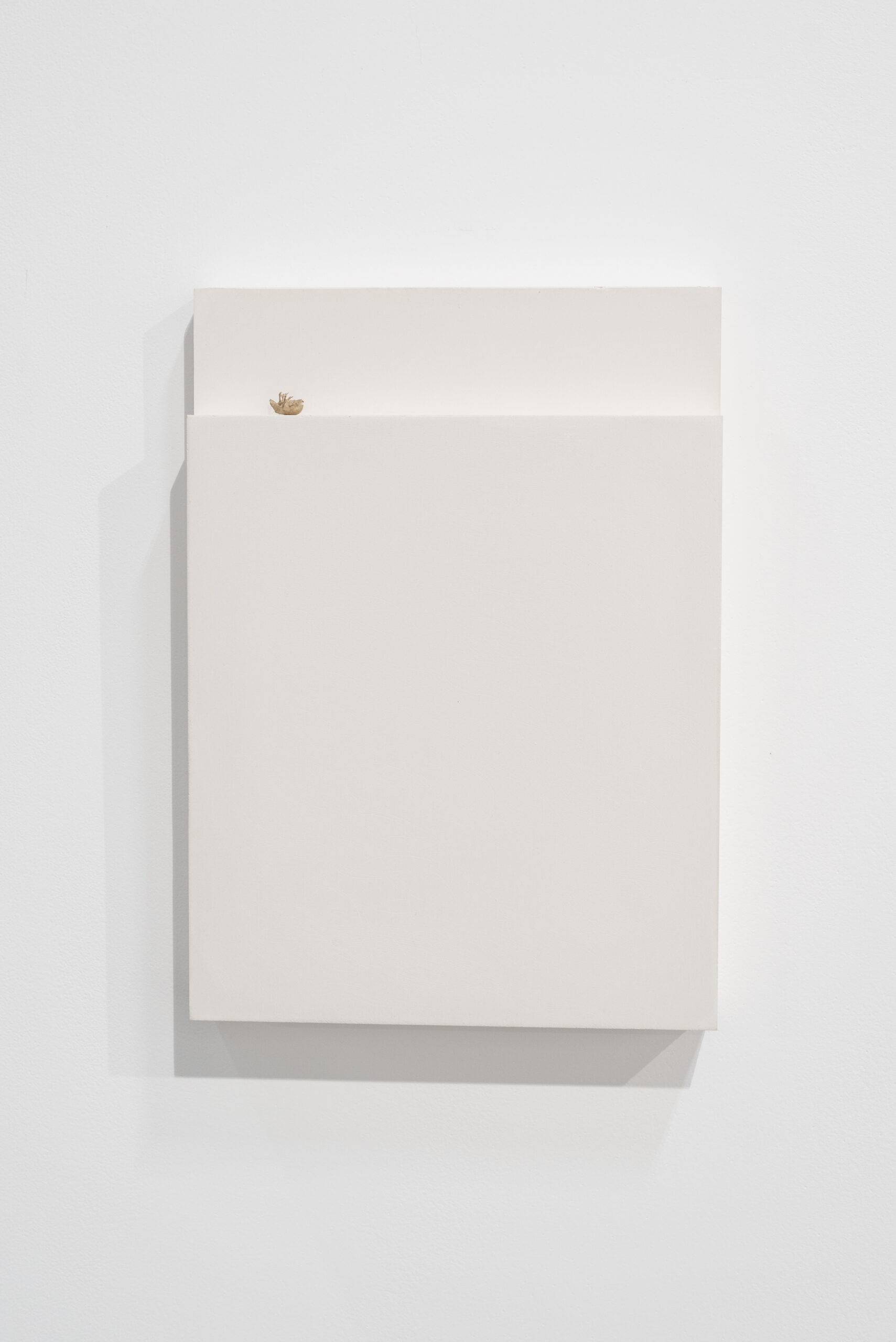
Nische IV
2025
Plaster, bronze
35 x 25 x 5 cm
2.400€
Nische III
2024
Plaster, bronze
35 x 25 x 5 cm
2.400€
Aggregation, 2018
Aggregation, 2018
Diplomausstellung Akademie der Bildenden Künste
München
„Aggregation refers to a gathering of animals of one or more species that happen to be in the same place at a specifictime—either by chance or due to an external cause—without any social bond existing between them. For this reason,aggregation is also referred to as a “pseudo-society.”
Foto credits: Peter Langenhahn, Kilian Blees
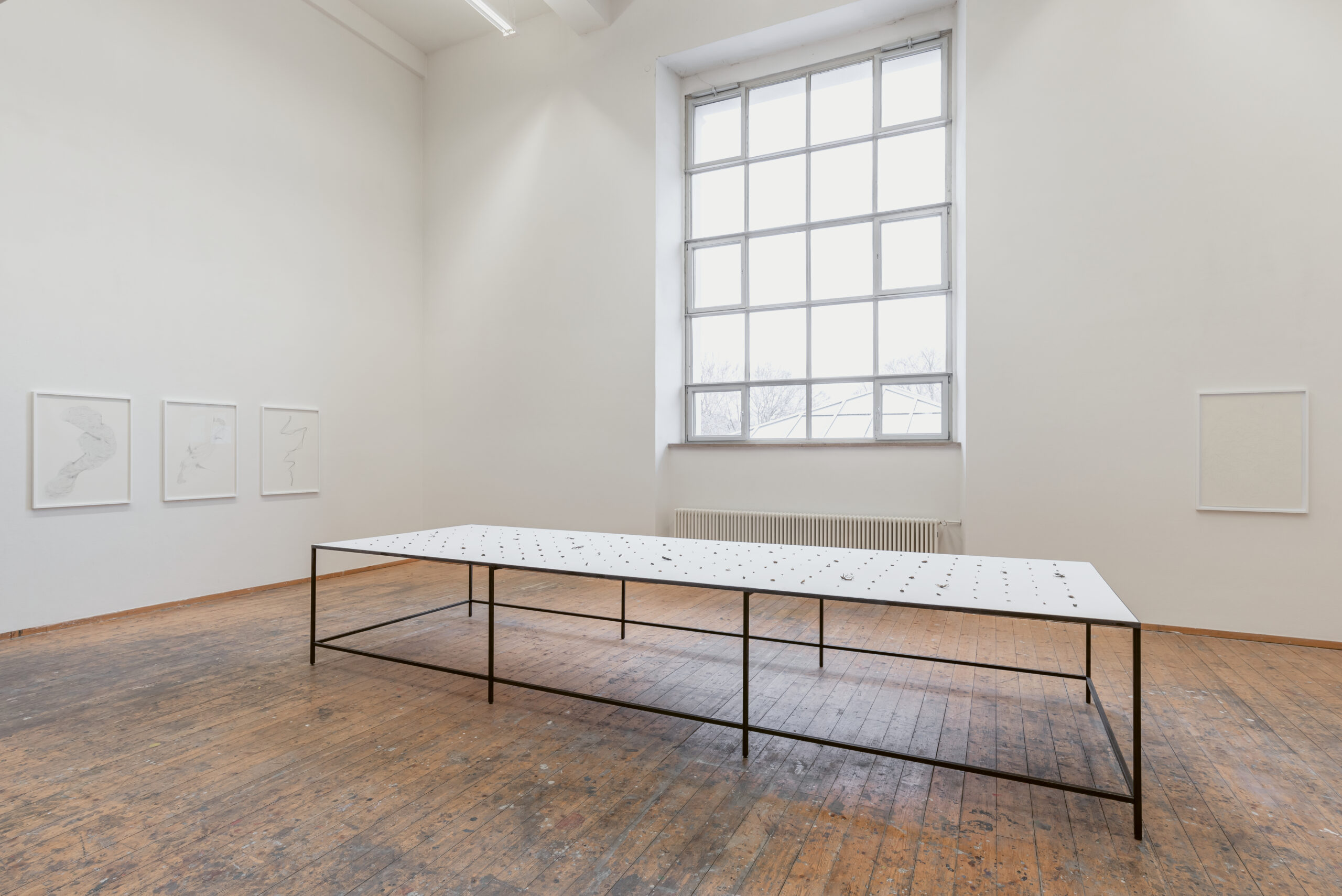
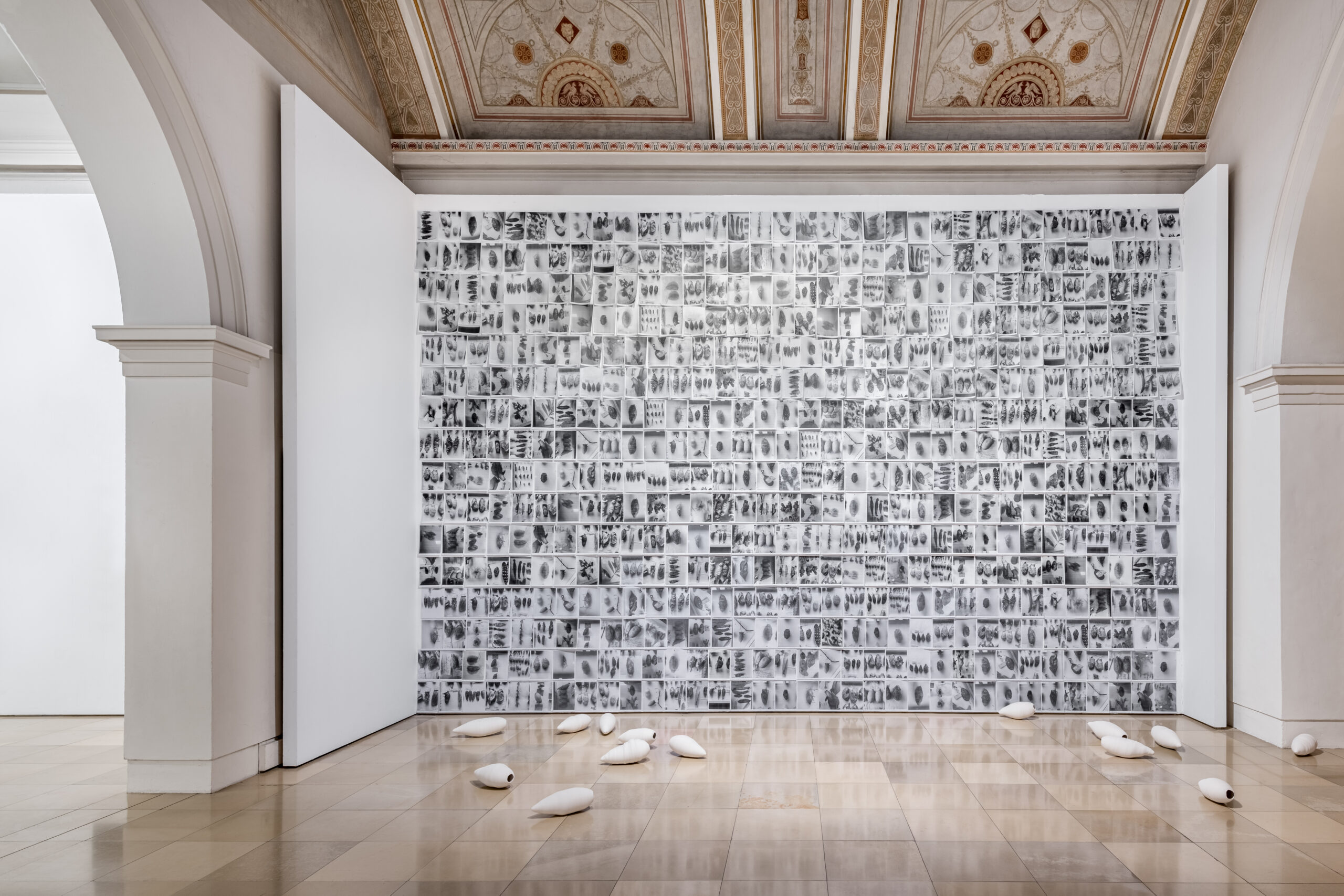
On a 5.10 x 1.70 m table, 203 bronze-castinsectslie in 7 long rows on a matte whitebackground. Over a period of 5years, an archive of insects found dead has been created. The insects were found and collected by Lea Grebe andbrought to the artist by acquaintances. The insects were found in Europe, in buildings and in nature.
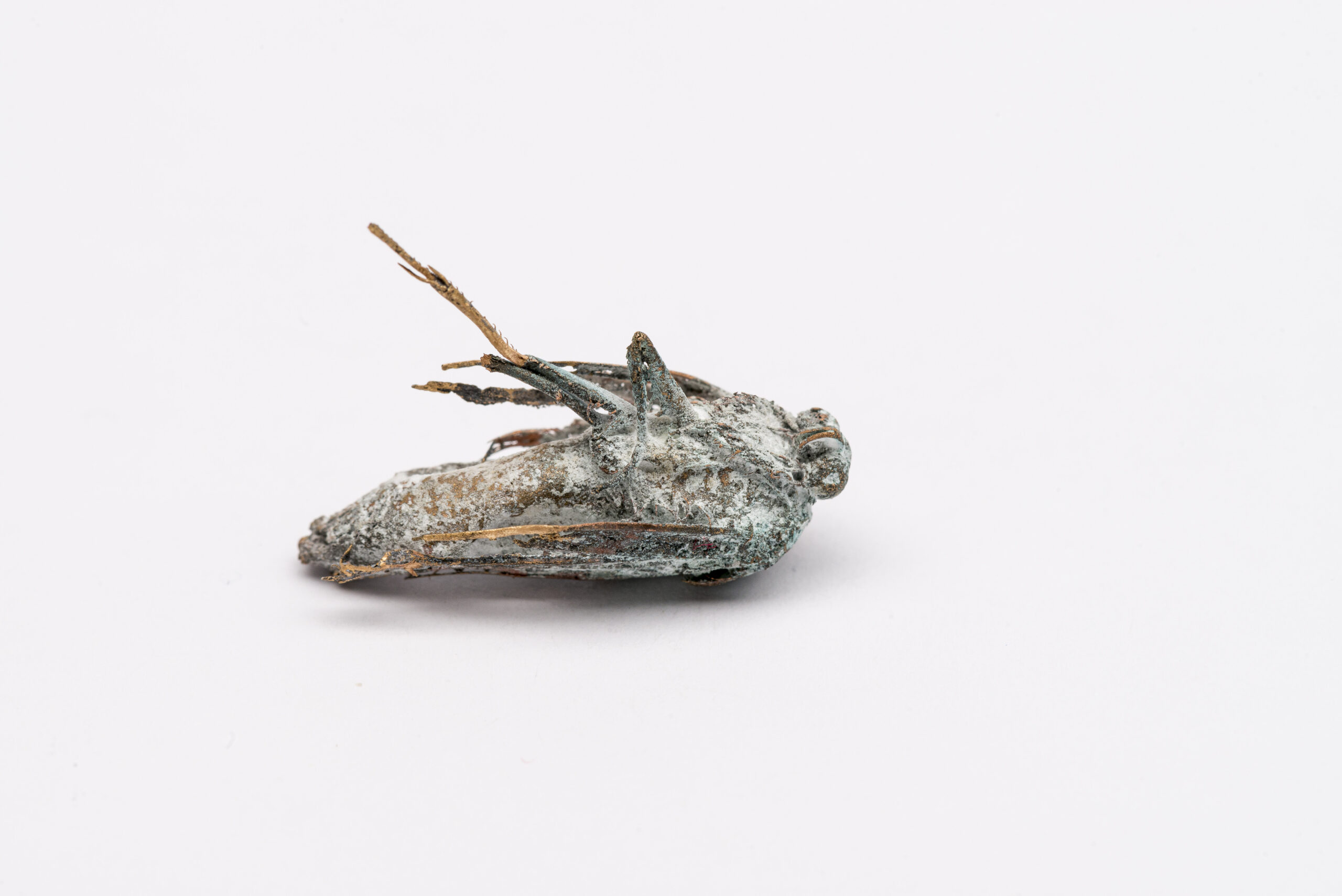
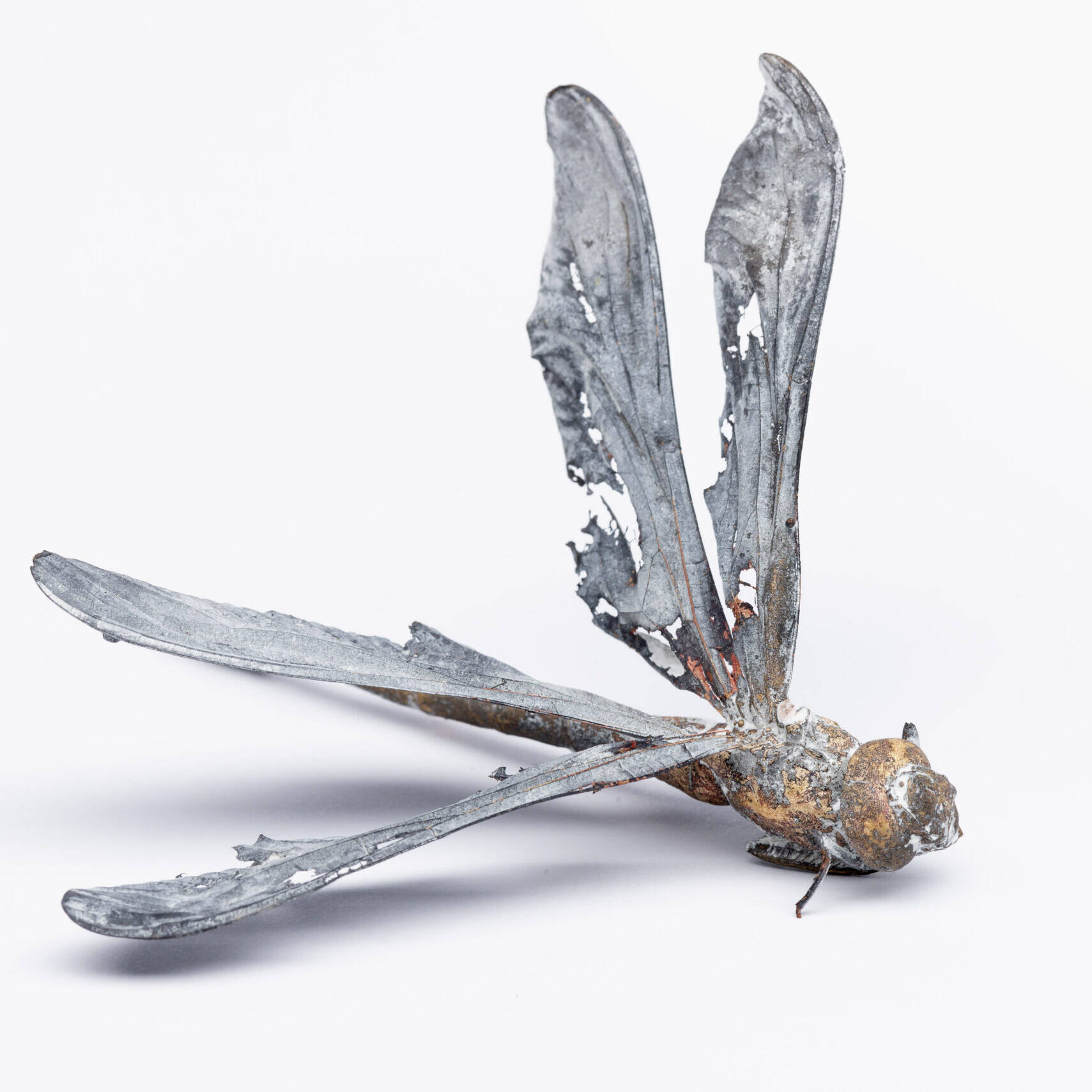
Each insect was photographically documented and assigned an inventory number, under which information such as thelocation, year, and month of discovery, the position found, and the date of casting in bronze was recorded. The insectswere not selected according to any specific criteria and were included in the archive exactly as they were found. As aresult, some are fragmented or damaged.
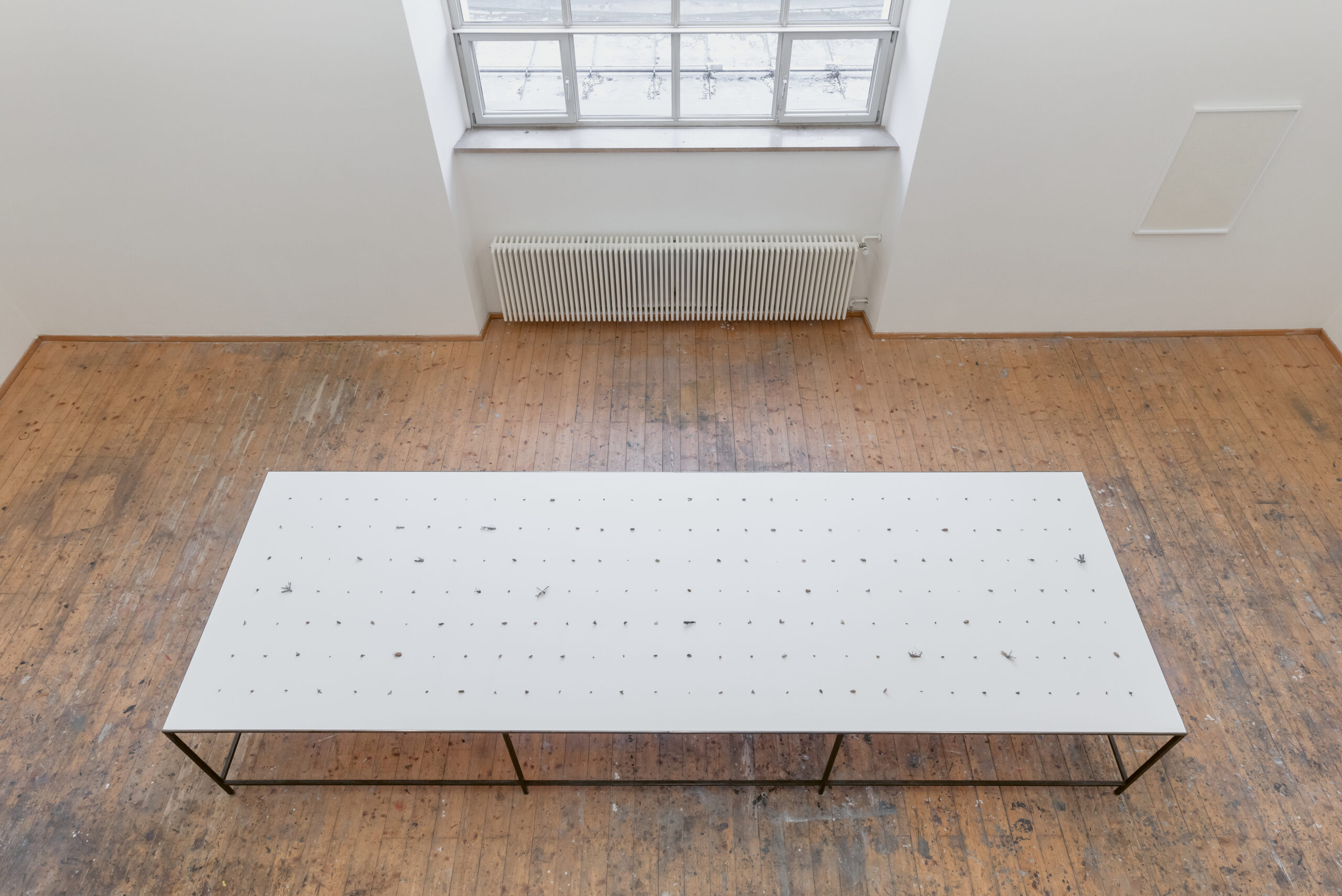
The presentation of each individual insect—its position and posture—corresponds to how it was found at its original lo-cation. In a labor-intensive process, each insect was cast in bronze using the lost-wax method. The actual insect no lon-ger exists after the casting.
Cocooning, 2020
Cocooning2020InstallationviewGalerie der Künstler:innen, Munich
Foto credits alle Bilder: Kilian Blees
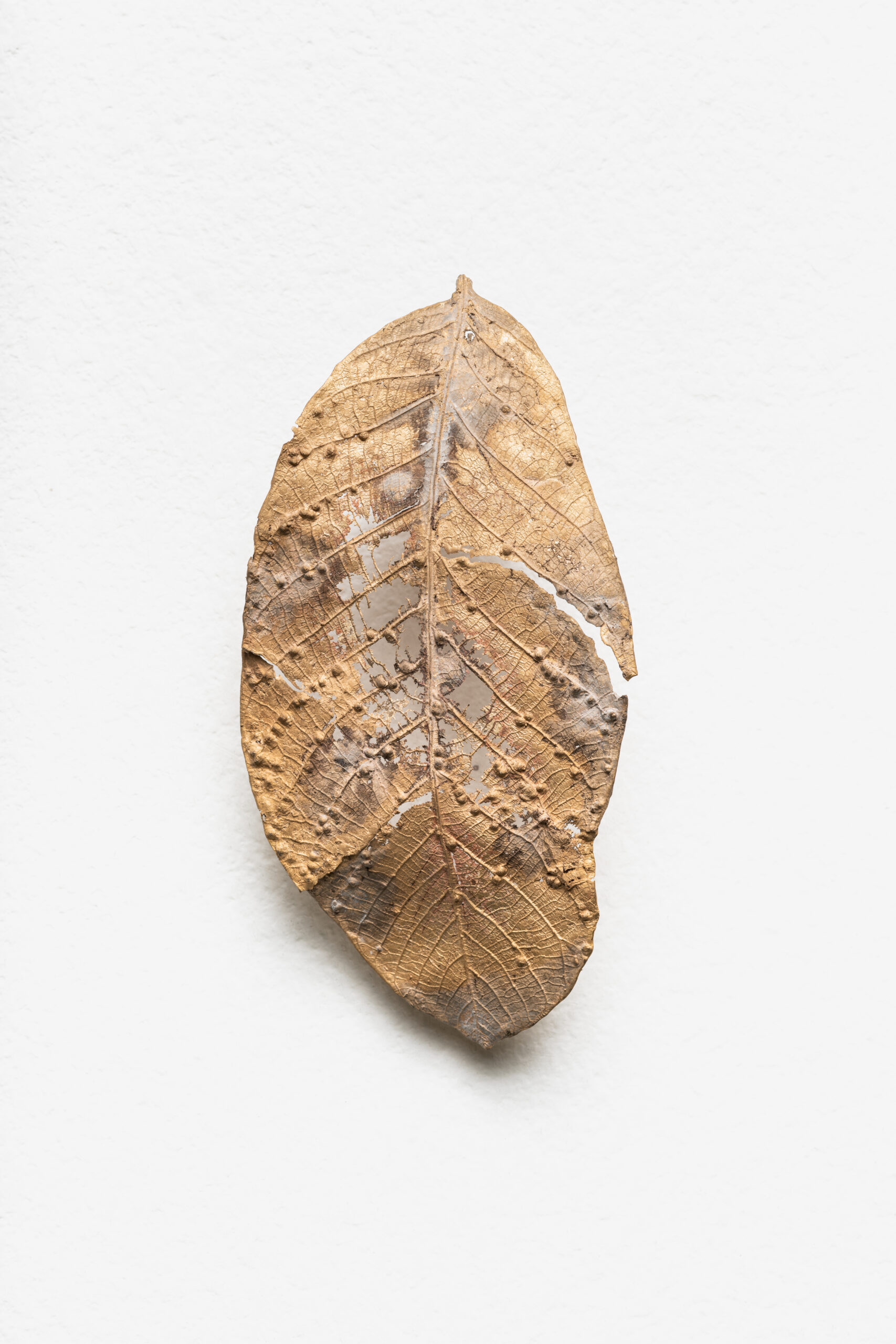
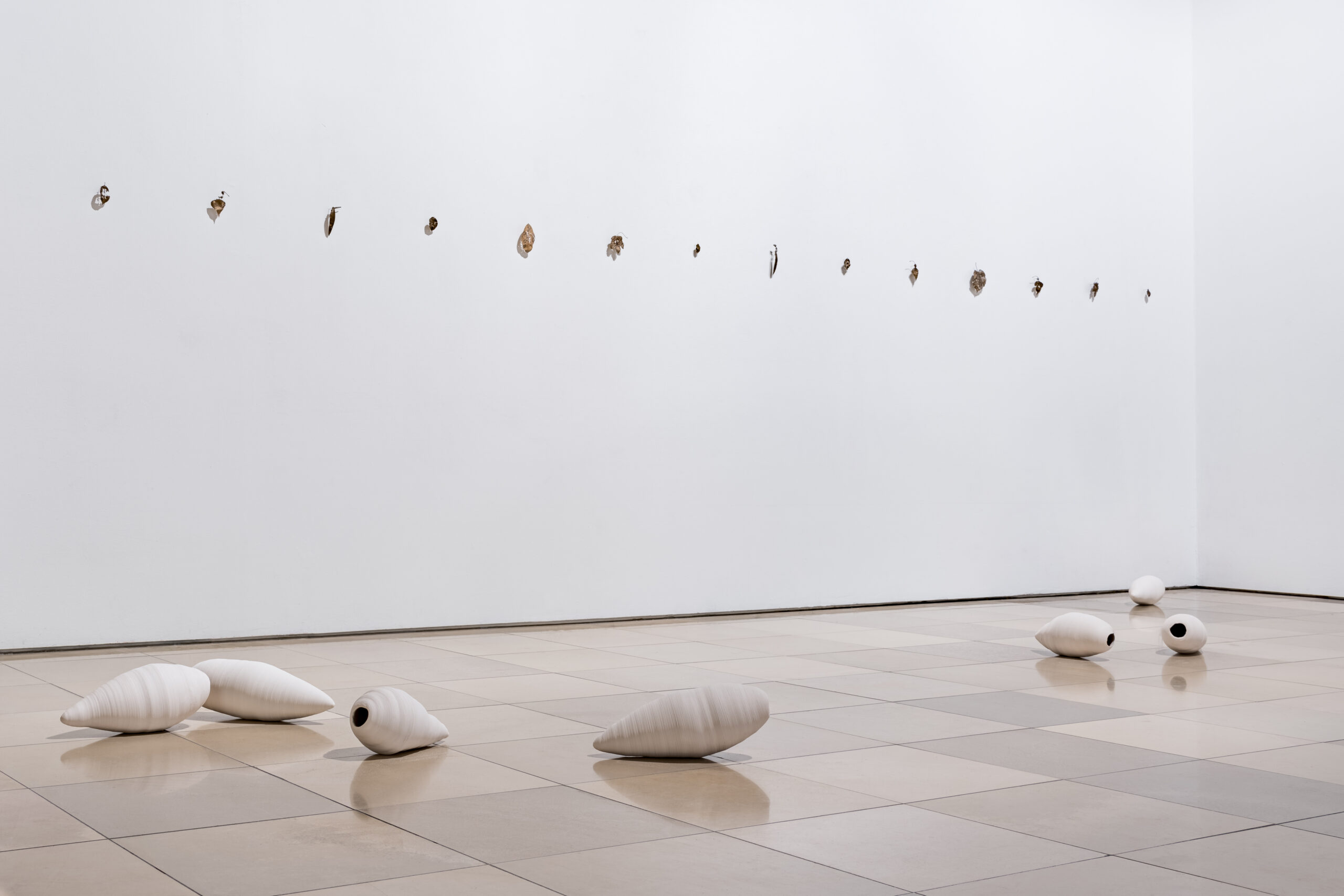
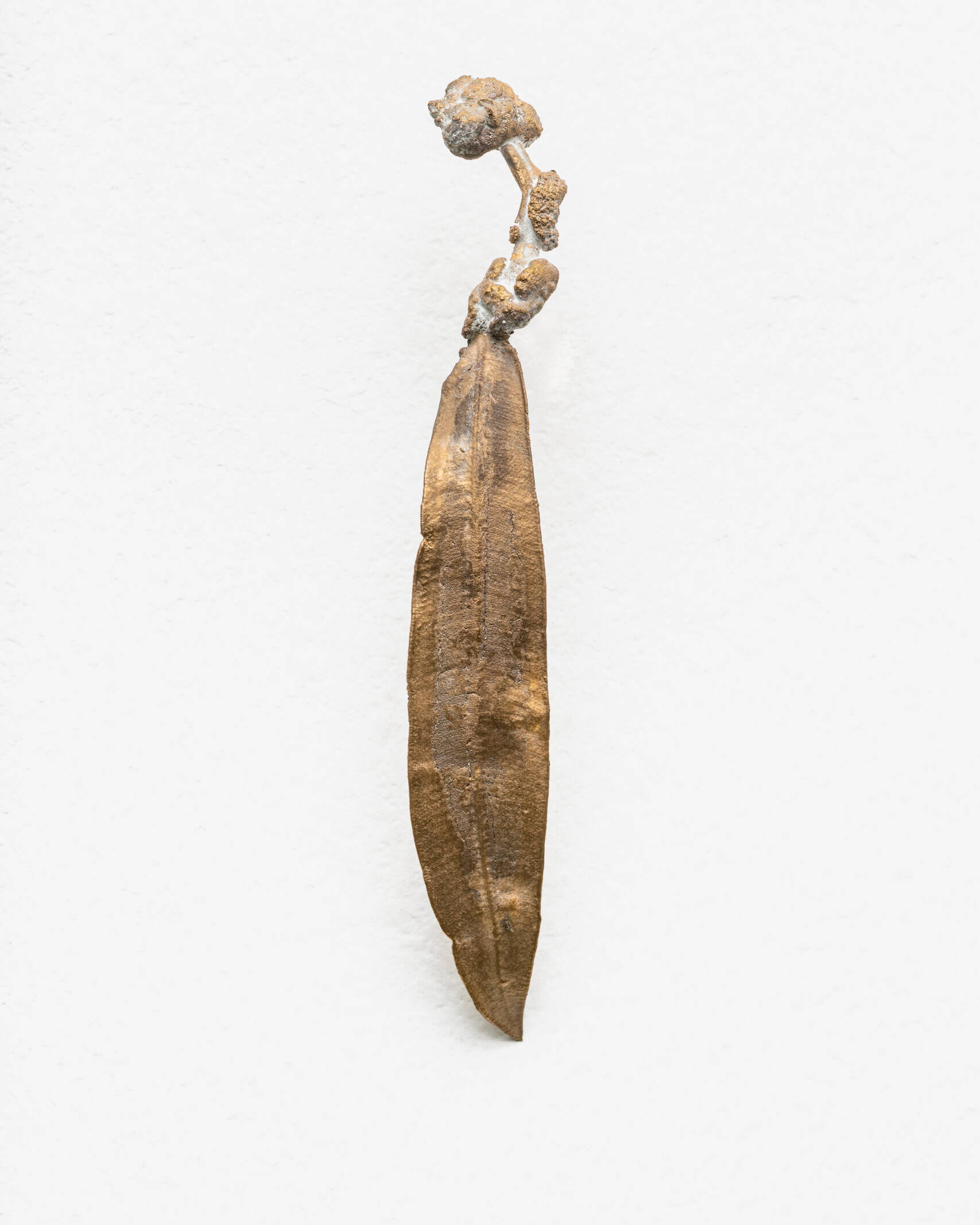
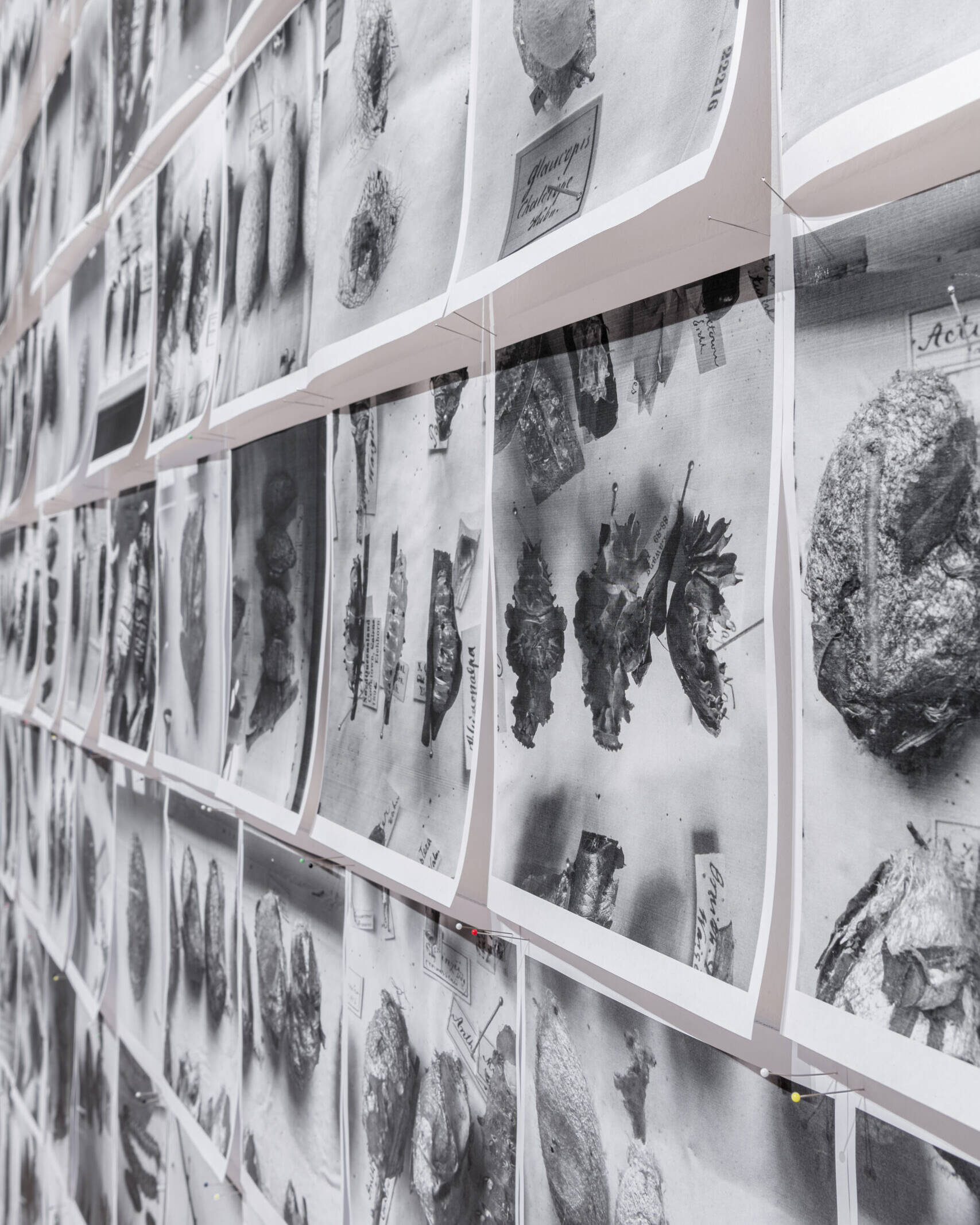
In her series “Cocooning,” Lea Grebe explores the forms of insect cocoons and plant galls. In these organic objects,which represent both a shelter and a form of symbiotic coexistence, the artist sees models for human behavior. She usesvarious media such as bronze, ceramics, and photography to open up different perspectives on the theme on a fictionallevel.
Cocooning IV, 2023
Cocooning IV, 2023InstallationviewKunstarkaden, Munich
Foto credits alle Bilder: Kilian Blees
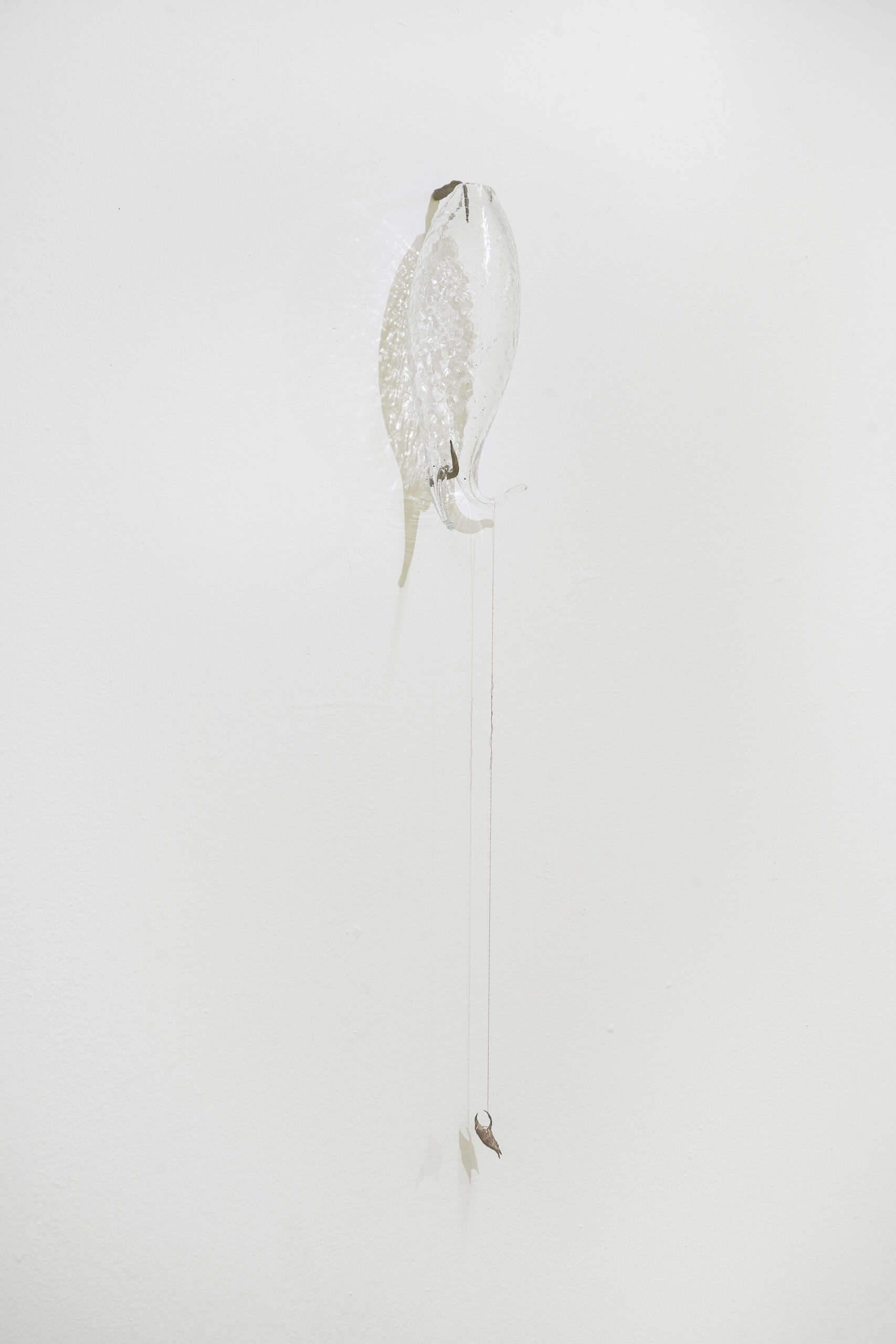
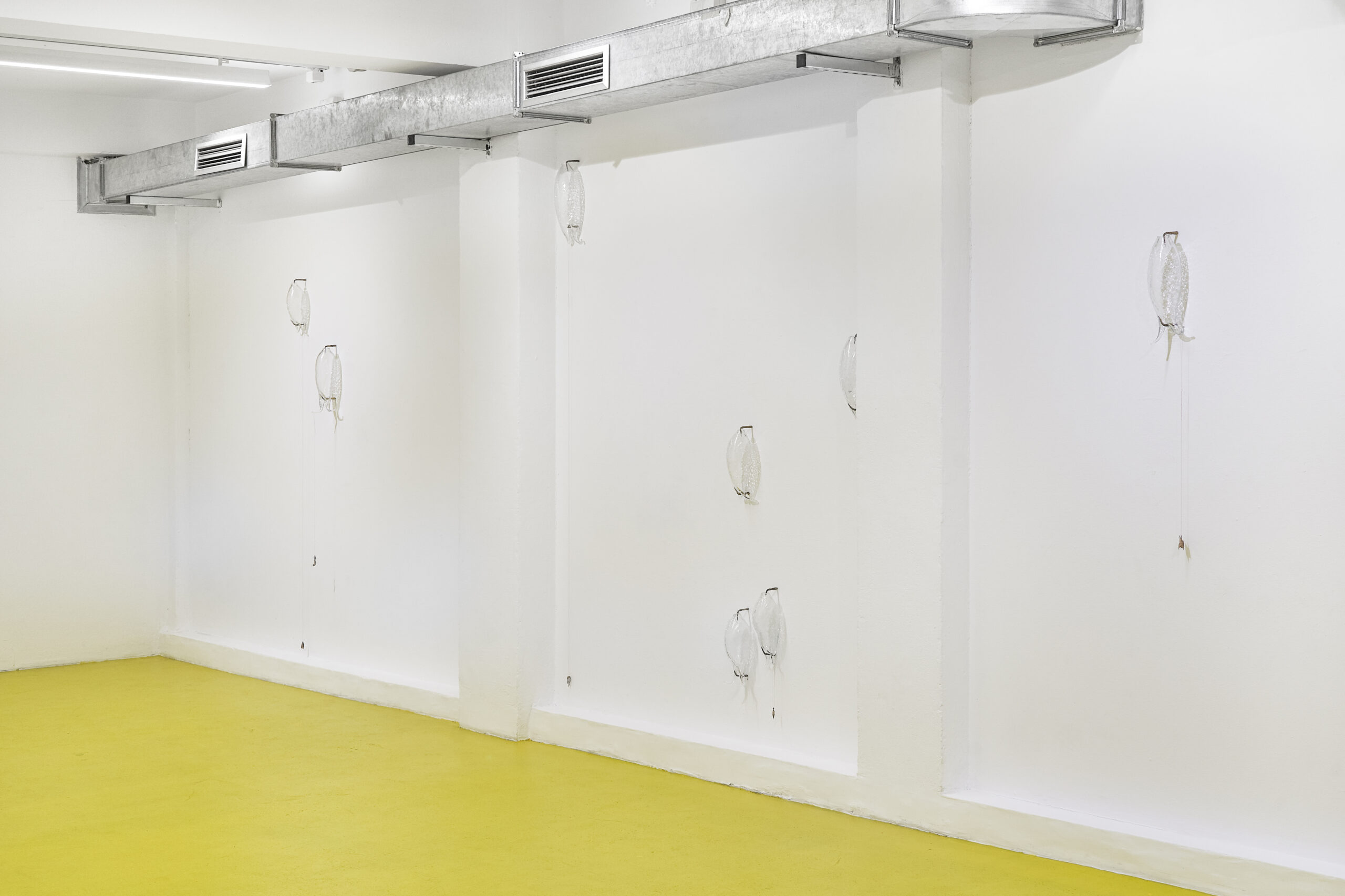
The exhibition space resembles an ecosystem—a fragile structure in which the works coexist symbiotically. The coco-ons from the series “Cocooning IV,” 2023, have found their place within the architecture of the room and nested there.In these sheltered niches, they can incubate, grow, and hatch in peace. Like a breeding room, the entire space is floodedwith yellow light radiating from the floor. The light and color vibrate before the eyes; the color warms, yet is at the sa-me time repellent and tiring for the viewer’s experience.
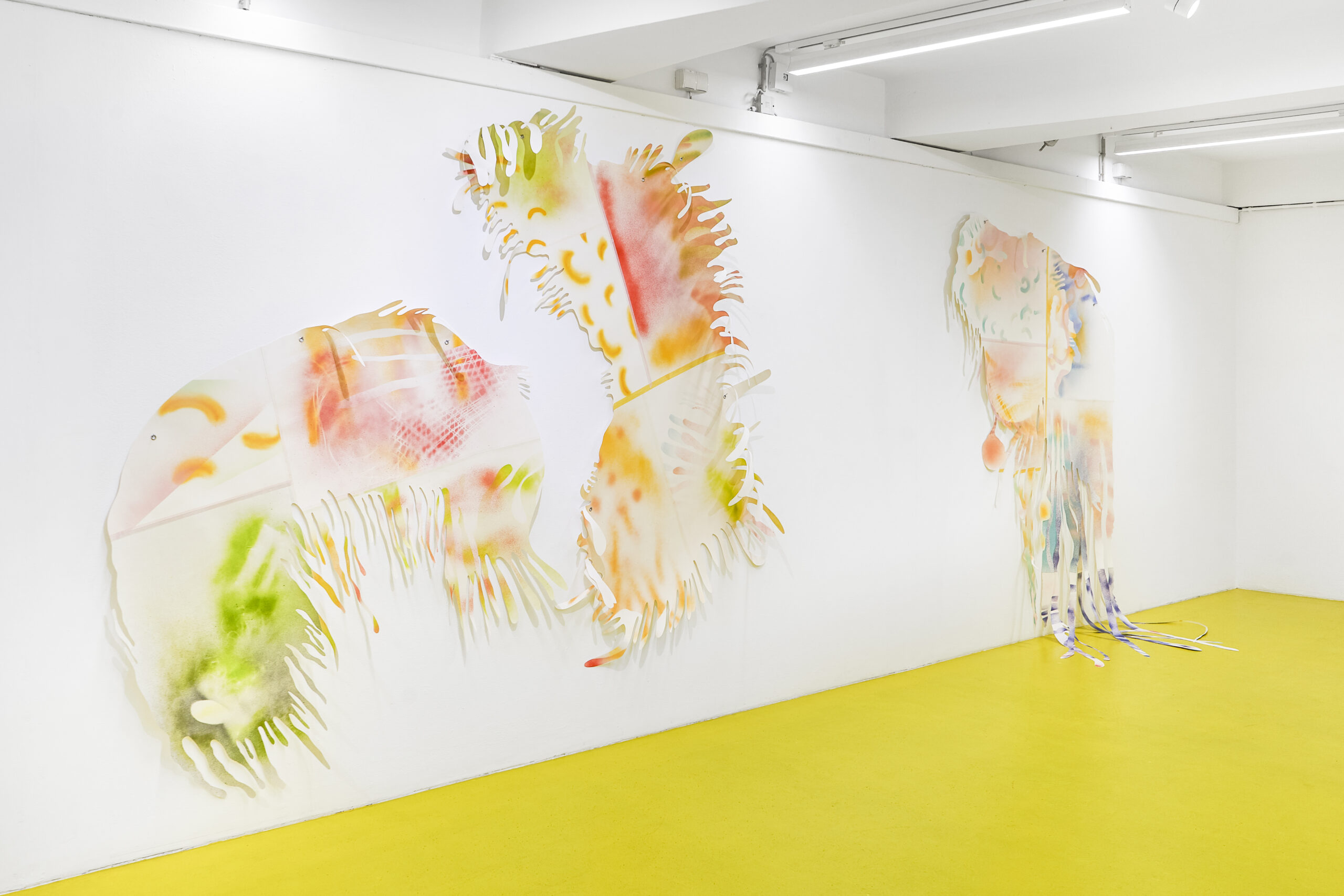
Opposite, seemingly floating in a vacuum, the “Hybrids” exist in a state of becoming, unclear whether they are vastlyenlarged or actually unfolded to this size within the space. Having just hatched, they are fragile, delicate, and preoccu-pied with themselves and their metamorphosis. It remains unclear whether they have already found their final form orare still in the process of transformation.
Hive I-VI, 2025
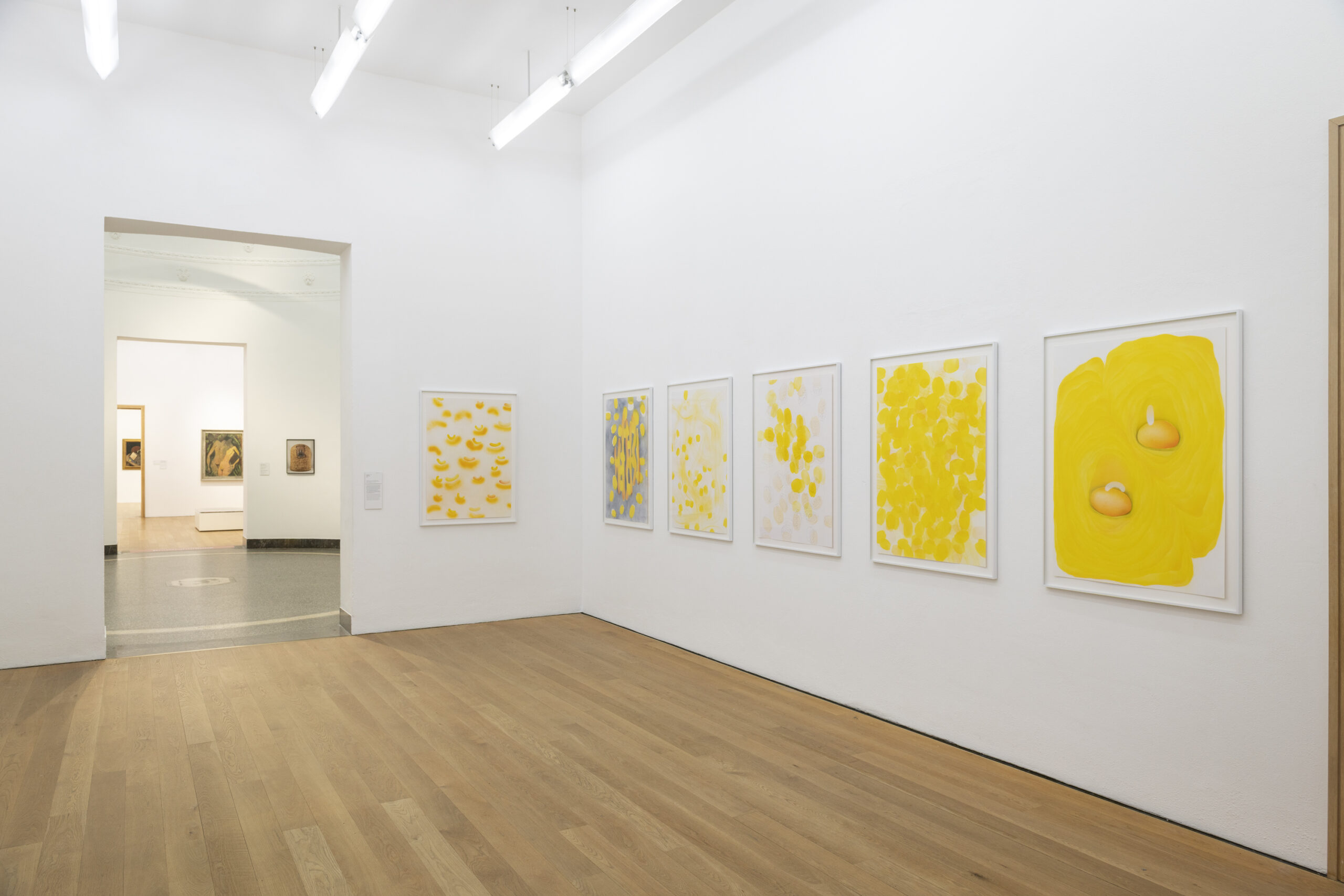
Hive I-VI, 2025Honiggelb - Die Biene in der KunstMuseum Wiesbaden
Foto credits: Bernd Fickert, sonst: Kilian Blees
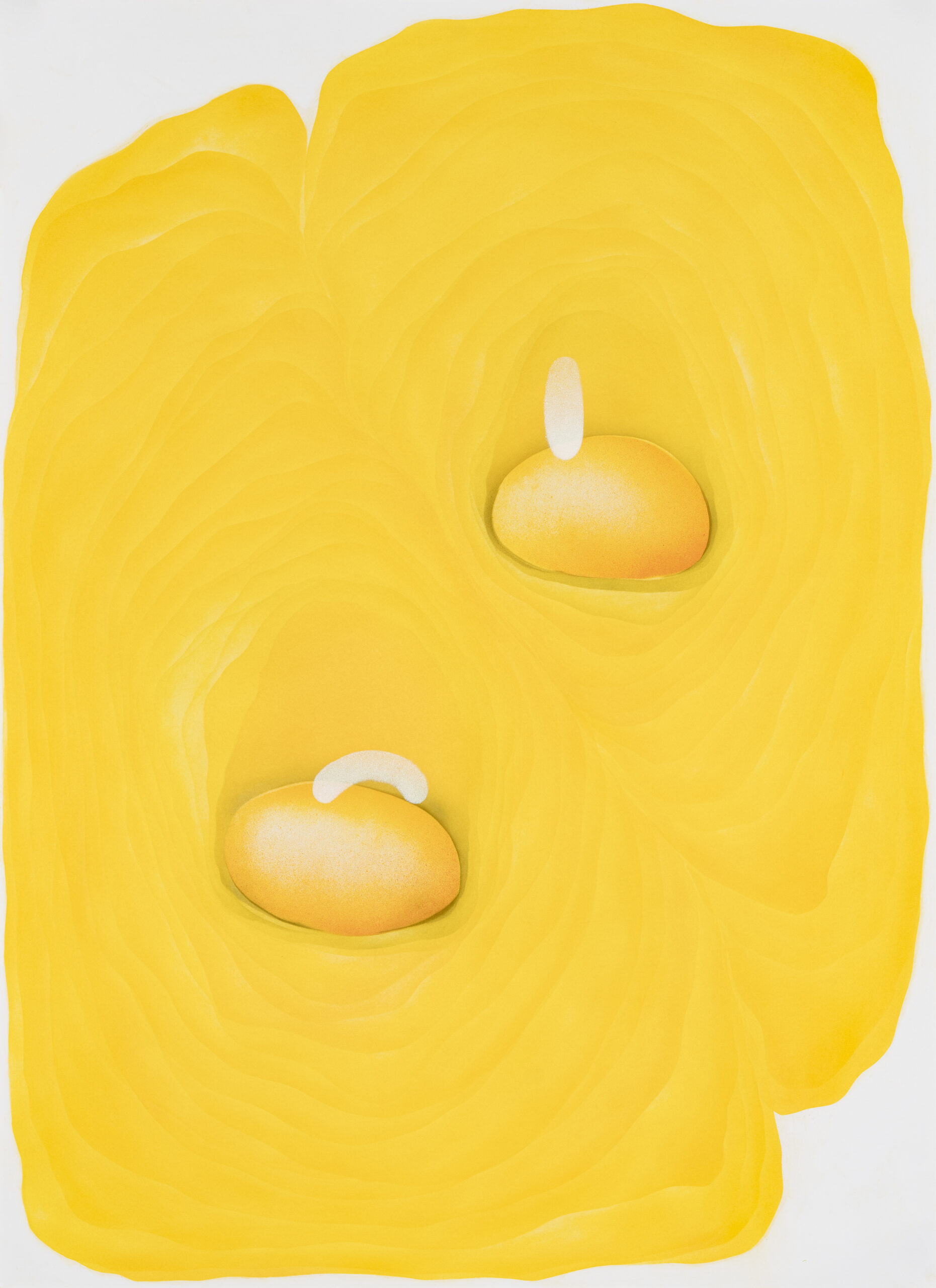
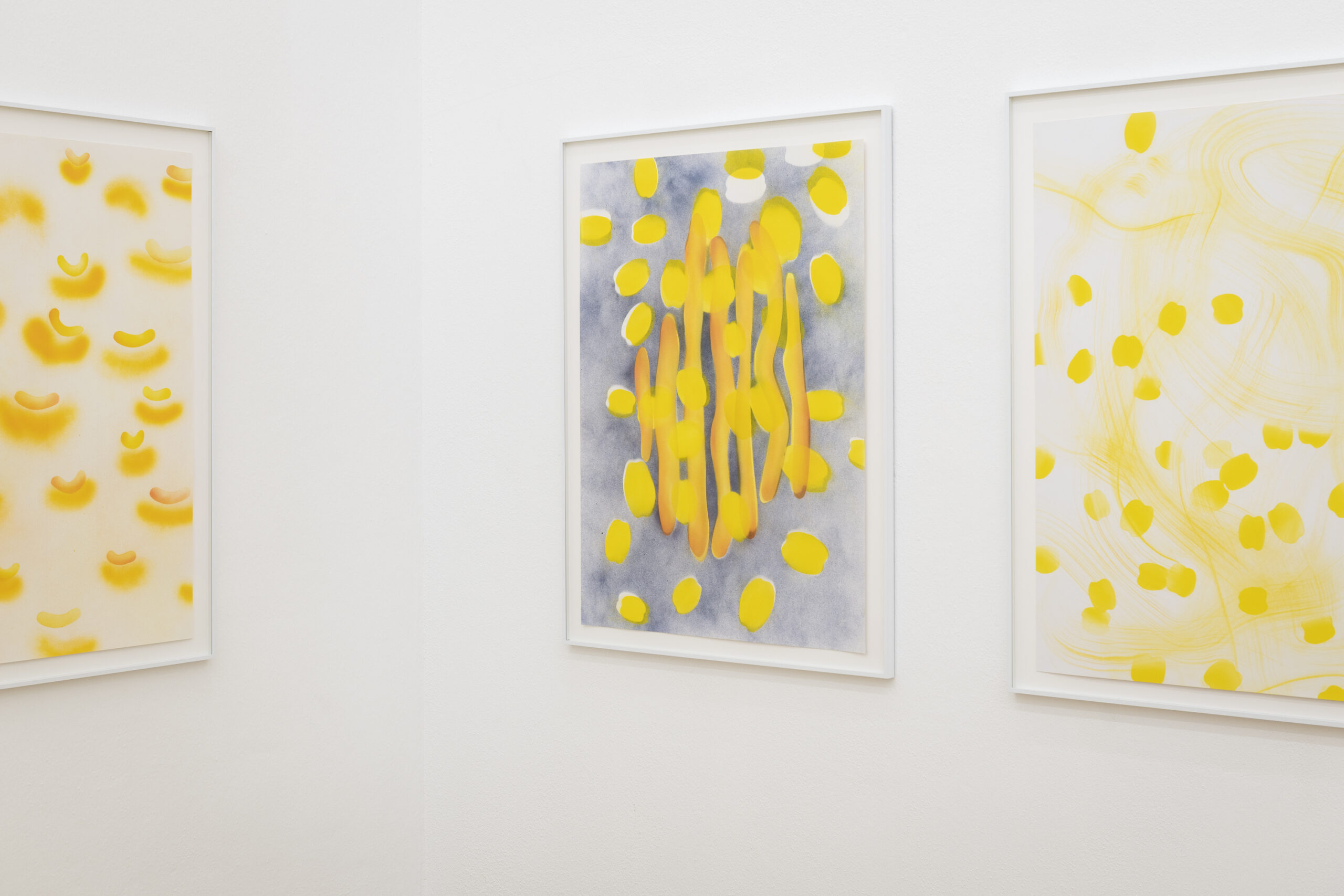
Insects are the matrix of our world; omnipresent and rich in species, they keep complex ecosystems running. In Hive(1–6), Lea Grebe exploresthe wild bee. Fragile formations in warm shades of yellow spread across six sheets of paper;the work was created using soft, finely ground pastel chalks that were then sieved and applied with a brush. This evokesassociations with pollen, as well as honey and wax. Due to the application of the material in watercolor-like layers, theimages seem to vibrate; additionally, there are sprayed elements.
Lea Grebe combines this technique—in which paint isatomized and applied in tiny dots—with the dynamism of swarming bees. The artist does not produce anthropomorphicstereotypes but is interested in the animals’ territory as well as the processes inside the beehive. The first sheet addres-ses metamorphosis, depicting larvae bedded in pollen within their cells as they pupate. Next, the audience sees two whi-te specimens developing from yolk-yellow eggs within their protective wax chambers. The narrative then shifts to theactions of adult bees performing a dance. Delicate black drawings allude to the serpentine movements through whichthe colony communicates information about food. The final sheet offers a view of plate-like honeycombs and their busyinhabitants.Through her art, Lea Grebe explores the social organization of wild bees; at the same time, the elements shedepicts do not always correspond exactly—edges overlap and blur, and the forms dissolve at their edges: We can onlyspeculate about what exactly is happening inside the hive or in the swarm’s collective consciousness.